



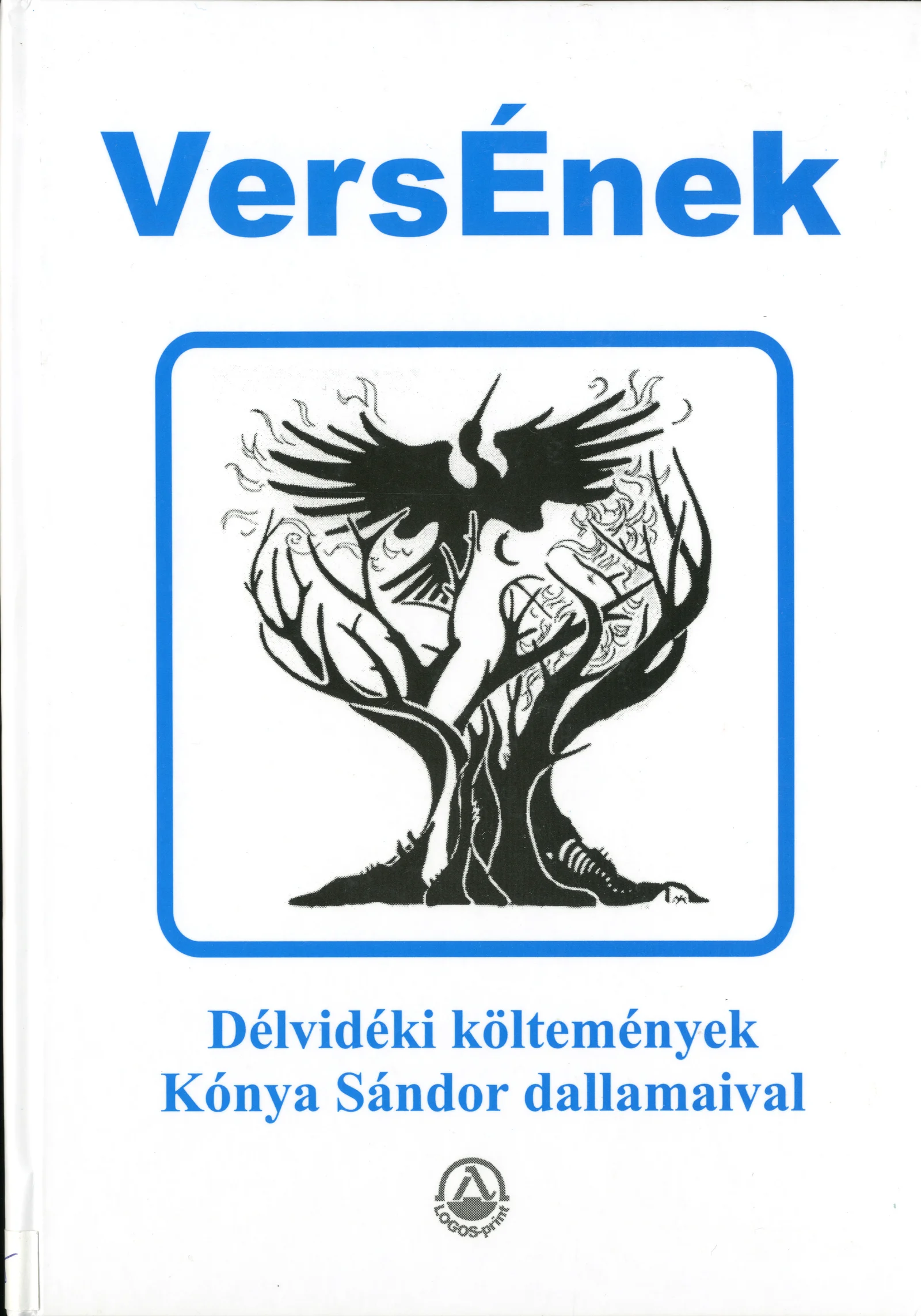
- Author:
- Kónya Sándor
- Year and place of publication:
- 2006,Tóthfalu
- Publisher:
- Logos Grafikai Műhely
- Responsible publisher:
- Márkus András
- ISBN:
- 86-84699-38-6
- Page count:
- 100 pages
Preface/Afterword
The discovery of the song as a sung poem is not a new phenomenon in the Hungarian-populated areas of Vojvodina. The genre, which emerged in the early eighties and gained increasing ground, became essential and even defining for two reasons. The songs, mostly performed on acoustic instruments, brought back an intimacy reminiscent of ancient lute-accompanied poetry, while on the other hand, the poem itself came to the forefront. It became more accessible, able to take flight when sung.
Sándor Kónya selected a substantial collection (sixty-nine, to be precise) of poems by Vojvodina poets and set them to music. Selection is never a grateful task; instead of completeness, it often highlights omissions. Nevertheless, these poems can offer a picture of our world that becomes authentic and thus enduring by showcasing and valuing our own merits. Of course, the melodies that accompany these texts play no small part here. They are extremely easy to sing and invite whistling even when merely “read from paper.” The relationship between melody and poem also piqued curiosity in this case: how Sándor Kónya “experienced” this or that poem. Everyone who approaches such a task with such dedication and possesses sufficient experience is granted the opportunity for their own interpretation, a rhythmic-melodic approach to words and lines, because this can already be considered a musical world. And this world clearly appears in Sándor Kónya’s songbook, and despite the diversity of the selected poems, it is surprisingly consistent. The songs, which can be accompanied by various instruments (only chords are indicated above the staff), sometimes offer surprises. For example, the accompaniment to Ferenc Fehér’s poem “Tisza-parti vallomások” (Confessions from the Tisza Bank) is particularly original, prescribing drumming on a tabletop as a rhythmic base, while the singing heard above it is almost ritualistic, evoking a chant or counting-out rhyme. In contrast, the melody of Nándor Kovács’s poem “Megtört apa balladája” (Ballad of a Broken Father) exudes a dramatic atmosphere, possessing a kind of noble obscurity. In addition, musical settings based on onomatopoeia are frequent (Tamás Jung: “Falusi búcsú” – Village Farewell), or pieces treated with justified irony, e.g., in the case of Béla Csorba’s poem “Rókavadászaton” (On a Fox Hunt). The basic tone of this palette, however, is primarily given by a stylized pentatonic scale reminiscent of Hungarian folk music and even more so of the traditional Hungarian song world, and the simple, often archaic harmonic world serving as its foundation.
It is a pleasant feeling to encounter a songbook that can appeal to both children and adults. Browsing through the scores, anyone can select and pick from it: a kindergarten teacher, a music teacher, or a parent, a small child, or a student learning to play the guitar. And of course, it is not indifferent to our poets from the Southern Region that their poems can now live on in such a musical form, as songs.
Ernő Verebes
Table of Contents
- Előszó helyett7
- I. BŰVÖLÉS
- Leng a barka10
- Nádbokrétás tó11
- Bűvölés13
- Nyüzsgés14
- Bálint Illés15
- Mit akar a holdsarló?16
- Kecskeringő17
- Rókavadászaton18
- A kertekben19
- November20
- Csöndes vers hóról, békéről, emberről21
- Didergő22
- Szöcskeszemű ablakok23
- Magyarázó vers24
- II. SZEMTŐL SZEMBE
- Ezüst tulipán26
- Szétosztom magam28
- Bizonytalanság30
- Szemtől szembe31
- Hangulat estefelé32
- Gondolataim34
- Vérvörös narancs36
- Miért írok?37
- Angyalvers38
- Szerelemért barátságot39
- Kezdetben volt40
- Naphívogató41
- Szerelmes verstöredék Máriának42
- Miért tetted?44
- Rejts el45
- Cédrusfa ága, 197946
- Kincs48
- Önzetlen önzéssel50
- Túl...51
- A tavalyi nyár52
- Olykor még53
- Csakazértse-vers54
- Balassi vitézei55
- Cirfa világ56
- Kele Máté57
- Gyagya vers58
- Hetetlen valami59
- Egyedül a napon60
- A nyolcvanéveseknek61
- Öröktől fogva62
- III. FESZÍTSD MEG A SZÁRNYADAT
- Utánam65
- Megtört apa balladája66
- Anyám Magyarország67
- Betlehemes ének68
- Furulyaszóra69
- Tisza-parti vallomások 12.71
- Megszámláltattunk72
- Feszítsd meg a szárnyadat73
- A Tisza sokadszor74
- Késő ősz a ludasi pusztán75
- Verbica kis falum76
- Téli fenyők77
- A terjáni réten78
- Délibábtengerre szálltam79
- Gyere80
- IV. FALUSI BÚCSÚ
- Fény82
- Falusi búcsú83
- Zilált papi ima84
- Mást látni85
- Május királynőjéhez86
- Mária87
- Tíz éve a temetőt járom88
- Kérdeztem...89
- Minden perc téged dicsérjen90
- Monsignor91
- A kötetben szereplő versek szerzői93
- Források96
- A versek megzenésítéséhez fölhasznált és ajánlott írások, művek99
- Tartalom100