


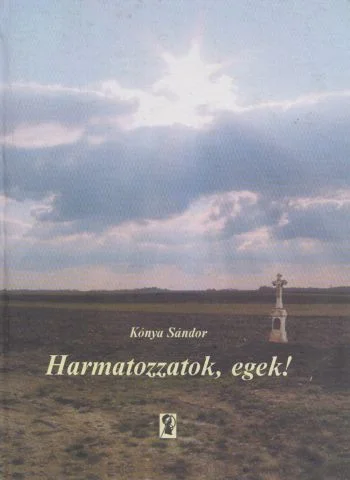
- Author:
- Kónya Sándor
- Year and place of publication:
- 2004,Senta
- Publisher:
- Thurzó Lajos Művelődési–Oktatási Központ
- Responsible publisher:
- Hajnal Jenő
- ISBN:
- 86 83029 21 2
- Page count:
- 405 pages
Preface/Afterword
FOREWORD
The book that the esteemed reader holds in their hands is a religious folk hymnary, as the order of the hymns follows the events of the ecclesiastical year, depending on the content of their texts. However, this hymnary also has an ethnographic character, and by presenting variations, it proclaims a living poetry and a living world of melodies. It is up to us whether our traditional hymns, carrying the sorrow, hope, and aspirations of our ancestors, continue to live on. Therefore, I recommend the treasures collected in Northern Banat to all who love to sing, especially our youth, as the beauty inherent in our hymns is captivating, and the calm strength emanating from them provides security.
Northern Banat
It is bordered by the Hungarian and Romanian national borders to the north and east, and by the Tisza River to the west. It was part of the former Torontál County, and today it essentially coincides with the territory of the northern deanery of the Diocese of Zrenjanin. The number of its Catholic Hungarians is around 22,300, the majority of whom are emigrants from Szeged, so the ö-dialect is dominant here. In Kikinda, there are also Hungarian Nazarenes, and in Egyházaskér, a few families are Reformed. Northern Banat is inhabited by Serbs in addition to Hungarians; in Tiszaszentmiklós, there is a Polish population of a few hundred with Slovak culture.
The lifestyle of our people is work, even if it yields little fruit. Nowhere else can one hear the local saying: "It is better to work in vain than to do nothing." The local peasantry cultivates tobacco and onions to a significant extent, in addition to corn and wheat.
The emigration that began a few decades ago is continuous and alarmingly intense. Our villages are aging. Our smaller settlements have already disappeared from the face of the earth: Sasülés near Magyarmajdány, Aranyhegy near Egyházaskér, Lőrinczfalva near Čoka, Erzsébettelep...
Although Čoka holds a significant place in the archaeological atlas of our globe due to Ferenc Móra's excavations, the archaeological sites from the Migration Period and the Middle Ages in Northern Banat are still awaiting excavation. The works of Cs. Simon István and Gubás Jenő provide a more comprehensive picture of the region, its inhabitants, and their social pathology.
Religious Folk Customs, Singing, the Hymns
The Hungarians of Northern Banat adhere to their traditions in certain areas of life, but in some cases, they easily abandon them (e.g., naming children).
They maintained their faith and religious customs even during decades of prohibition; processions were confined to the church or the churchyard, but their practice did not completely cease. In recent times, the holding of processions has revived; nowadays, so-called Marian processions are also held at any time to achieve a common goal or wish (this often involves ensuring priestly vocations). Pilgrimages have changed in that walking has been replaced by travel by vehicle (to Doroslovo, Vršac, Töröktopolya...), but this also provides an opportunity to cover greater distances (pilgrimages to Rome, Lourdes, Fatima, Jerusalem).
Among the localized devotions, the novenas, the Lourdes novena is generally known in the territory of Northern Banat. In addition to the nine-day devotion, a so-called great novena is also performed (dedicated to Saint Anthony every Tuesday of the year) and a small novena (a three-day devotion before Easter).
Common prayer afternoons are often organized, combined with Marian processions. The rosary movement is very strong, especially among the elderly. With the construction of cemetery mortuaries, the tradition of wake-keeping is slowly disappearing, but wake-up hymns continue to be sung during prayers before the funeral.
From what has been said, it is clear that the religious customs of our people change and transform with changing circumstances, thus remaining alive. While some elements of this world of customs disappear, new ones also emerge alongside the revived old ones.
It is a very important fact that at least half of the time dedicated to folk devotions is always spent singing. If by chance the cantor did not arrive at the village church, then Aunt Kati or Aunt Erzsi leads the singing; the song must be heard, it must resound. The hymns are resilient, they want to live (e.g., the Bethlehem play has ceased, but its songs are still widely known).
In our region, the texts of the hymns are mainly drawn from the songbooks without melodies titled Orgonavirágok and Orgonahangok, but there are also many printed wake-up books and a plethora of old and new chapbooks. The melodies have been most influenced by the Tárkányi–Zsasskovszky and Jósvay hymnaries to this day. More recently, various editions of Szent vagy, Uram!, Hozsanna, and Hitélet are also in use. We can gladly state that even this abundant source material does not satisfy the demands. Handwritten or typed versions of new hymns spread almost like wildfire. Examples include the society rosary hymns (Nos. 148-151) or the hymn about conversion (No. 337), and although their melodies often resemble those of Hungarian folk songs, and their texts are sometimes unpolished, their strong poetic images, which often occur, seem to form a viable branch of our hymn poetry. New hymns are also created in honor of local patron saints, mainly through the efforts of cantors and precentors, by pairing an updated text compiled from traditional formulas with a known melody (Nos. 176, 180), but there are also those who compose a melody for a written text (No. 19). There are countless hymns whose text is performed with the melody of another known hymn (e.g., Nos. 53, 55, 172–174, 177, 178, 182, 183...). Individual intent also creates new compositions in all respects, a good example of which is the work of József Haupt, who composed many hymns (Nos. 158, 159, 184). The emergence of variants would deserve a separate study; regarding the melodies, it is worth noting that some singers expand, almost stretch, the vocal range (cf. 47a, -b; 66a, -b; 94a, -b), some prefer the hard scale, others the soft (cf. 170a, -b), some adhere to the bar lines, others less so, rather adapting the melody to the syllables of the text (cf. 19, 47). I would like to draw attention to two more important facts: the melodic ornamentation, sometimes rich in inflections (Nos. 16, 83, 82b, 87, 189, 209, 211a) and the asymmetrical rhythm of the melody (3, 13, 55, 97, 190b); these phenomena have virtually disappeared from our secular folk songs. Religious hymns, compared to our folk songs, are mostly more complex in structure, reflecting a striving for variety and a higher level, but in some cases, a proven art song also exemplifies the recurring structure of our new-style folk songs (see e.g., No. 159). From the large mass of hymns, the seemingly most popular and most frequently occurring type stands out: the melody with a double line in its penultimate line and a recurring structure.
About the Collection of Hymns
The collection of religious hymns was carried out in a similar manner to the collection of folk songs, with tape recordings, but due to the length of the hymns, often only the first two or three stanzas were recorded, and the remaining parts of the texts were transcribed based on the printed or written texts of the singers. We recorded the songs of people whom their community considered good singers or precentors. It happens that they perform the duties of a cantor in the village, although they do not have formal training for it. I am grateful to them because they had patience with me. They often interrupted their work to sit down at the tape recorder, and they were not annoyed if we returned to certain details for clarification and understanding.
In addition to living sources, it proved useful to utilize the material of old handwritten cantor books, which, unfortunately, I could only access in Čoka. However, my disappointment in this regard was amply compensated by the extraordinary richness, variety, and multifaceted nature of the Čoka cantor books' material, spanning several generations. In addition to mass hymns, we also find novena, pilgrimage, and funeral hymns, as well as hymns for devotions that have now withered away (morning mass, Rogation Days).
Fortunately, the priests and cantors serving in Čoka generally accepted and transcribed the hymns of the people's devotions outside the church.
Principles and Method of Publication
Our goal is, on the one hand, to present valuable and beautiful hymns, and on the other hand, we feel it is our duty to present, at least in a cross-sectional manner, the religious hymns sung in Northern Banat in the past and today. Thus, it is natural that alongside melodies of clearly foreign origin (e.g., Nos. 127–129, 231), melodies belonging to the world of Hungarian folk songs (Nos. 130, 233, 234, 236, 237) have also been included in the volume. However, hymns that are frequently sung but offer nothing new compared to the versions published in approved hymnaries are not included.
The first line of each hymn is listed as a title below its serial number. At the beginning of the musical notation, a metronome number indicates the tempo of the hymn; an eighth-note metronome number refers to the asymmetrical nature of the melodic line. There is no tempo indication for hymns from handwritten cantor books. The melodies are transposed to the g1 final note customary in folk music. (Of course, this is not mandatory for the pitch or register of any performance.) Below the hymn, the place of collection, the name of the singer, their age, and the year of collection are indicated. This is followed by other remarks, mainly concerning melodic kinship, as the arrangement of the hymns in the volume is text-oriented.
Acknowledgements
I thank the good intentions of the singing informants, the pastors, friends, and acquaintances for facilitating the organization of the collection, Dr. Béla Tarjányi, president of the Saint Jerome Catholic Bible Society, for supporting the collection, and my colleagues for their encouragement and inspiration.
In the professional field, I utilized most of the advice from folk music researcher Anikó Bodor, and I thank her for her selfless help.
Finally, thanks are due to the Ministry of National Cultural Heritage of the Republic of Hungary and the Logos Independent Graphic Workshop in Tóthfalu for their financial support in preparing the manuscript and publishing this book, as well as to the publisher, the Thurzó Lajos Cultural Center in Senta, which provided the conditions for the book's creation.
Čoka, 2003. On the Feast of the Presentation of the Lord
Sándor Kónya
Table of Contents
- ELŐSZÓ
- BEVEZETŐ
- ÁDVENTI ÉNEKEK (1–15. sz.)
- A Megváltó várása (1–4. sz.)
- 1. Ó, emeld fel, gyarló nemzet31
- 2. Ó, jöjj, ó, jöjj, üdvözítőnk32
- 3. Halljátok ti, kik a porban laktok33
- 4. Jön az Atya megígértje34
- Hírvitel (5. sz.)
- 5. Názáretnek kisded városába35
- Mária Szeplőtelen Fogantatása (6. sz.)
- 6. Ó, Mária, szűz virágszál36
- Mária-ének hajnali misére (7. sz.)
- 7. Názáretbe vonnak szent vágyaim 37
- Hajnali misére (8–9. sz.)
- 8. Harmatozzatok, egek 38
- 9. Harmatozzatok, szent egek39
- Szűz Máriához (10–13. sz.)
- 10. Igazság rég várt hajnala40
- 11. Üdvözlöttünk, ó, Mária 41
- 12. Szűz Mária, Jézus anyja 42
- 13. Ó, drágalátos rózsaszál43
- Szűz Mária és a kovács lánya (14. sz.)
- 14. Egek királynéja, mennyország csillaga44
- A szálláskereső Szűz Mária (15. sz.)
- 15. Mária, Szent József nagy útra indultak47
- KARÁCSONYI ÉNEKEK (16–52. sz.)
- Köszöntők (16–20. sz.)
- 16. Mostan kinyílt egy gyönyörű virág51
- 17. Mostan kinyílt egy szép rózsavirág52
- 18. Kinyílott a legékesebb rózsa54
- 19. Üdvözlégy, ó, drága vendég55
- 20.a Titkos fényű csillag támad56
- 20.b Fényes csillag támadott föl57
- 20.c Titkos fényű csillag támad 57
- Kóringyálás (21. sz.)
- 21. Dicsértessék a kis Jézus 58
- Betlehemezés (22–23. sz.)
- 22. Hej, víg juhászok, csordások59
- 23.a Vígan zengjetek, citerák 60
- 23.b Vígan zengjetek, citerák 61
- 23.c Az angyalok zengedeznek62
- Éjféli misére (24–26. sz.)
- 24. Kürie, eleiszon, örüljünk63
- 25. Pásztorok, fel, éjfél van64
- 26. Eljött a szent éjközép65
- Gyermekeknek (27–31. sz.)
- 27. A kis Jézus aranyalma 66
- 28. E karácsony éjszakáján 67
- 29. Kirje, kirje, kisdedecske68
- 30. Fenyőgallyas kis Jézuska69
- 31. Jertek, kössünk gyöngykoszorút70
- Szűz Máriához (32–33. sz.)
- 32. Ó, Mária, Istenünknek ép teremtménye71
- 33. Örülj, Szűz 72
- Mária bölcsődalai (34–37. sz.)
- 34. Sír az Isten báránya73
- 35.a A szép Szűz Mária74
- 35.b A szép Szűz Mária75
- 36. Kedves álmot hogy szerezne szülöttjének76
- 37. Leborulva imádja a szent Szűz kisdedét77
- Pásztorénekek (38–52. sz.)
- 38. Csordapásztorok78
- 39.a Pásztorok, keljünk fel 79
- 39.b Pásztorok, keljünk fel80
- 40. Pásztorok, nyájaktól keljetek fel81
- 41. Pásztortársim, új hírt mondok82
- 42. Ne féljetek, pásztorok83
- 43. Bárcsak régen fölébredtem volna85
- 44. Ó, mily szerencsésen 86
- 45. Sötét éjjel Betlehem tájára87
- 46. Ó, boldog Betlehem88
- 47.a Betlehemnek pusztájában 90
- 47.b Betlehemnek pusztájában 91
- 48. Eljött a rég várt, szép aranyidő 92
- 49. Üdvözítőnk született93
- 50. Örömnapot adott nékünk94
- 51. Ó, csodáknak csodája95
- 52. Elérkezett ama boldog96
- ÚJÉVI ÉNEKEK (53–62. sz.)
- Hálaadásra (53–54. sz.)
- 53. Ó, felséges, nagy Úristen 101
- 54. Idők Ura, Istene102
- Újév napára (55–58. sz.)
- 55. Kétezer-egyedik évbe103
- 56. Adj, irgalmas Isten 105
- 57. Üdvöz légy, új napfényünk106
- 58. Kél a magasból tiszta fény 107
- Jézus nevéről (59–60. sz.)
- 59. A hálás szív föltekint 108
- 60. Jézus, a rád emlékezés109
- Vízkeresztre (61–62. sz.)
- 61. A három bölcs király 110
- 62. Imádjuk a jámbor bölcsekkel111
- A FARSANGI IDŐ ÉNEKEI (63–69. sz.)
- Esküvő (63–65. sz.)
- 63. Induljatok már el 115
- 64. Jézus, mennyei vőlegény 115
- 65. Nézz e földi jegyesekre11
- Kánai menyegző (66. sz.)
- 66.a Az igaz Messiás már eljött119
- 66.b Az igaz Messiás már eljött121
- Mária menyegzője (67. sz.)
- 67. Szívünk, lelkünk vigadjon122
- Gyertyaszentelőre (68–69. sz.)
- 68. Ki negyven nap előtt123
- 69.a Az Isten házába siet 125
- 69.b Az Isten házába siet 127
- NAGYBÖJTI ÉNEKEK (70–98. sz.)
- Bűnbánat (70–75. sz.)
- 70. Isten áldjon, tünde játék131
- 71. Indulj meg már, szemem 132
- 72. A bánatban elmerülve133
- 73. Hívásodra, Uram 134
- 74. Szerettél engemet135
- 75. Magasan áll a Golgota ormán136
- Hamvazószerdára (76–77. sz.)
- 76. Hamvazkodjál, hívő lélek138
- 77. Mi, gyarló emberek139
- Krisztus szenvedéséről (78–81. sz.)
- 78. Égi alkotónknak 141
- 79. Jézus, én szerelmesem 143
- 80. Kiterjeszté az éj szárnyát144
- 81. Jaj, mit hallok 145
- Keresztútjárás után (82. sz.)
- 82.a Megjártuk már a szent keresztutat146
- 82.b Megjártuk már a szent keresztutat 148
- Jézus sebeiről (83–85. sz.)
- 83. Üdvöz légy, édes Jézusom 149
- 84. Jézus Krisztus150
- 85. Lehullott a Jézus vére152
- Mária siralma (86–89. sz.)
- 86. Jaj, nagy kedvvel tartott154
- 87. Ó, én gyászba borult 155
- 88. Ó, jaj nekem, bús anyának156
- 89. Ó, jaj nékem, Máriának 158
- A fájdalmas Szűzanyáról (90–91. sz.)
- 90. Adj, Jézus, szívembe160
- 91. Gyászba borult 161
- Feketevasárnapra (92. sz.)
- 92. Nézz, keresztény, a keresztre162
- Nagypéntekre (93–95. sz.)
- 93.a Királyi zászlók lobognak163
- 93.b Királyi zászlók lobognak164
- 94.a Én nemzetem 165
- 94.b Én nemzetem167
- 95. Urunk menvén olajfák hegyére168
- Balladás énekek (96–98. sz.)
- 96. Jézus Getszemáni-kertben170
- 97. Egykor a kis Názáretben172
- 98. Mikor az Úr Jézus174
- HÚSVÉTI ÉNEKEK (99–113. sz.)
- Nagyszombatra (99–100. sz.)
- 99.a Föltámadt Krisztus e napon 177
- 99.b Föltámadt Krisztus e napon 178
- 100. Szombat első napjára179
- Húsvét napjára (101–104. sz.)
- 101. Üdvöz légy, drága nap180
- 102. Szép, ragyogó napunk támadt 181
- 103. Húsvét nagy napja 182
- 104. Üdvözítőnk feltámadott 183
- Öröménekek (105–109. sz.)
- 105. Győzedelmi ének harsog184
- 106. Dicsőség és hála 185
- 107. Ó, egek, vigadjatok186
- 108. Örök király187
- 109. Alleluja, örvendezzünk 188
- Máriához (110. sz.)
- 110. Vértanúknak királynéja189
- Fehérvasárnapra (111. sz.)
- 111. Jó pásztor, húsvétnak áldozatja190
- Áldozócsütörtökre (112–113. sz.)
- 112. Uram, jó nekünk191
- 113. Gerjedj, lelkem, szent örömre 192
- ÉNEKEK BÚZASZENTELÉSRE (114–115. sz.)
- 114. Ó, Istennek hív szolgája195
- 115. Égi Atyánk, ó, tekints le 196
- PÜNKÖSDI ÉNEKEK (116–118. sz.)
- 116. Üdvözlégy, pünkösdi királyunk201
- 117. Áldja a Szentlelket 202
- 118. Mit jelent az égi szózat203
- ÉNEKEK A SZENTHÁROMSÁGHOZ (119–121. sz.)
- 119. Minden lények, imádjátok207
- 120. A Szentháromságnak208
- 121. Ó, megfoghatatlan 209
- ÚRNAPI ÉNEKEK (122–124. sz.)
- Körmenetre (122–123. sz.)
- 122. A mennyei vőlegénynek213
- 123. Jertek a nagy áldozatra 214
- Az oltároknál (124. sz.)
- 124. Angyalok gyönyöre215
- ÉNEKEK JÉZUS SZÍVÉHEZ (125–130. sz.)
- 125. Leszállottál az oltárra 219
- 126. Jézus tiszta, Szent Szíve220
- 127. Édes Jézus, öntsd szívembe222
- 128. Ó, Jézus, hová menjünk223
- 129. Nézz le mennyből224
- 130. Jézus Szíve, legdrágább kincs225
- MÁRIA-ÉNEKEK (131–160. sz.)
- A Gyümölcsoltó Boldogasszonyhoz (131. sz.)
- 131. Mily boldog vagy229
- Májusra (132–135. sz.)
- 132. Zöldellő virágszál230
- 133. Ó, Mária, liliomszál231
- 134. Téged áldjon 232
- 135. Szép májusnak királynéja233
- Mária Szívéhez (136–137. sz.)
- 136. Ó, Legszentebb Szív asszonya 234
- 137. Szeplőtlenül fogantatott235
- A Sarlós Boldogasszonyhoz (138. sz.)
- 138. Júdea hegy-völgyin túl237
- A Havi Boldogasszonyhoz (139–140. sz.)
- 139. Halljátok-e, magyarok238
- 140. Isten városában240
- A Nagyboldogasszonyhoz (141–142. sz.)
- 141. A mennyei szent városnak 241
- 142. Az ég kitárva fénylakát 242
- A Kisboldogasszonyhoz (143. sz.)
- 143. Megjelent egy kisded243
- A Hétfájdalmú Szűzanya napjára (144. sz.)
- 144. Fiam, Jézus 244
- Az Olvasós Boldogasszonyhoz (145–146. sz.)
- 145. Rózsafüzér királynője 245
- 146. Isten anyja, Szűz Mária246
- Szombatra (147. sz.)
- 147. Szűz Mária napjának 247
- Titokváltásra (148–149. sz.)
- 148. Megszólalt mennyország249
- 149. Jertek, Szűz Mária tisztelői 251
- Társulati Rózsafüzér-énekek (150–151. sz.)
- 150. Van egy gyönyörű kert 252
- 151. Mária kertjének254
- Fohász Máriához (152–160. sz.)
- 152. Ó, áldott Szűzanya256
- 153. Sírok a te keserveddel 258
- 154. Világ örök csodája260
- 155. Ó, Szűzanyám, add meg kegyesen 261
- 156. Ó, Mária, terjeszd ki palástod 262
- 157. Gyászba borult egek 263
- 158. Kesergő híveid édes vigassága 264
- 159. Segítő Szűz, kegyes anyánk 265
- 160. Tündöklő csillaga népeidnek266
- A BÚCSÚJÁRÓK ÉNEKEI (161–170. sz.)
- Induláskor (161. sz.)
- 161. Boldog Szűz Mária269
- Útközben (162. sz.)
- 162. Egek királynéja271
- Oltárhoz vonuláskor (163. sz.)
- 163. Dicsértessék Jézus neve274
- A kegyhelyen (164–168. sz.)
- 164. Dicsértessék Jézus és a Szűz Mária 275
- 165. Mária tiszteletére276
- 166. Nyíljon ki a szívünkben277
- 167. Magyaroknak Nagyasszonya279
- 168. Anyánk, ó, boldogságos Szűz281
- Hazaérkezéskor (169–170. sz.)
- 169. Hála legyen néked 282
- 170.a Hál’ Istennek, elvégeztük 283
- 170.b Hál’ Istennek, elvégeztük284
- ÉNEKEK A SZENTEKRŐL (171–184. sz.)
- Szent János (171. sz.)
- 171. Szent Jánosnak szép, kegyes áldása287
- Szent György (172. sz.)
- 172. Ó, Szent György, bajnokunk288
- Szent László (173–174. sz.)
- 173. Zengd, magyar nemzetünk289
- 174. Dicsérjük Szent Lászlót290
- Szent Péter és Pál (175. sz.)
- 175. Két szép csillag291
- Szent Illés (176–177. sz.)
- 176. Föltekintünk292
- 177. Isten az ószövetségben 293
- Szent István király (178. sz.)
- 178. Ó, Szent István, dicsértessél 294
- Szent Mihály főangyal (179–180. sz.)
- 179. Szentháromság hős bajnoka 295
- 180. Szent angyal, Arkangyal296
- Szent Ferenc (181. sz.)
- 181. Szent szegénység nagy barátja297
- Szent Vendel (182–183. sz.)
- 182. Ó, Istennek hív szolgája 298
- 183. Szent Vendel, Isten szolgája299
- Árpádházi Szent Erzsébet (184. sz.)
- 184. Néped büszkesége, Szent Erzsébet asszony300
- A KILENCEDEK ÉNEKEI (185–206. sz.)
- Szállást keres a Szent Család (185–188. sz.)
- 185. Szállást keres a Szent Család 303
- 186. Üdvöz légy, Szent Szűz304
- 187. Ó, Jézus, Jézus306
- 188.a Szent János áldása307
- 188.b Köszönjük, jó gazdánk308
- Lourdes-i kilenced (189–197. sz.)
- 189. Mária, tekints reánk309
- 190.a Mária, Mária, kinyílt rózsa311
- 190.b Mária, Mária, kinyílt rózsa312
- 191. Elkészült a koszorú313
- 192. Megnyílott az egek gyémántkapuja315
- 193. Százezerszer üdvözlégy316
- 194. Szeplőtelen Boldogasszony318
- 195. Nagy örömmel mennyekben319
- 196. Mária, Mária, eljött az éjszaka320
- 197. Isten veled, anyánk321
- Szent Józsefhez (198–199. sz.)
- 198. Szent József, Úr Jézus fölnevelő atyja 323
- 199. Szent József, Szent József325
- Szent Antalhoz (200–202. sz.)
- 200. Szent Antalt köszönteni 327
- 201. Páduának dicső szentje 328
- 202. Csodákat kik látni vágytok 329
- Szent Annához (203–204. sz.)331
- 203. Koszorút köt neked 330
- 204. Üdvözlégy, ó, föld öröme331
- A kilenced végén (205–206. sz.)
- 205. Elindult Szent Péter332
- HALOTTASÉNEKEK (207–220. sz.)
- Virrasztáskor (207–216. sz.)
- 206. Isten hozzád, Szent Szűz333
- 207. Atyám, hogyha lehet 337
- 208. Így fizet az álnok világ 338
- 209. Elmúltak már minden kínjaim339
- 210. Megfizettem én már340
- 211.a Jézusomnak kegyelméből 341
- 211.b Jézusomnak kegyelméből 342
- 212. Mint gyászba borult erdő344
- 213. Ó, halandó ember 345
- 214. Mária, tekints le 346
- 215. Mária az egekből 347
- 216. Szűz Mária, tekints le348
- Temetéskor (217–218. sz.)
- 217.a Indulok síromba350
- 217.b Indulok síromba351
- 218. Seregeknek szent Istene352
- Halottak napjára (219–220. sz.)
- 219. Ó, Isten, ó, Atyánk353
- 220. Bús arcokat látok én 354
- ÉNEKEK KÜLÖNBÖZŐ ALKALMAKRA (221–237. sz.)
- A Szent Kereszthez (221. sz.)
- 221. Ó, Szent Kereszt áldott fája359
- Áldozásra (222–223. sz.)
- 222. Oltárra nézz 360
- 223. Égből leszállott, angyali kenyér361
- Lelkipásztorokhoz (224–225. sz.)
- 224. Nagyhatalmú, mennyei szent fölség363
- 225. Üdvözlünk szívünkből365
- Kántorokhoz (226. sz.)
- 226. Kántorok, kántorok 366
- Reggelre (227–228. sz.)368
- 227. Hajnal hasadtával 367
- 228. Az éjszaka immár eltel369
- Estére (229–233. sz.)
- 229. Adjon Isten 370
- 230. Adjon Isten jó éjszakát371
- 231. Adjon Isten jó éjszakát 372
- 232. Íme, lement a fényes nap373
- 233. Este van már374
- Esőért (234–235. sz)
- 234. Nincsen, aki megsegítsen375
- 235. Mária, bűnösök pártfogója376
- Vigasztalás (236. sz.)
- 236. Ó, ne búsulj377
- Megtérésről (237. sz.)
- 237.a Édes Jézus, hozzád jöttem 379
- 237.b Siessetek, hamar lejár 380
- IRODALOM
- MUTATÓK
- Dallammutatók
- 1. Sorvégzők385
- 2. Szótagszám388
- 3. Dallamszerkezet393
- Betűrendes szövegmutató397
- A gyűjtés helyszínei
- Táblázat401
- Térkép402
- ВЕРСКЕ НАПОДНЕ ПЕСМЕ ИЗ СЕВЕРНОГ БАНАТА (РЕЗИМЕ)403
- RELIGIÖSE VOLKSLIEDER AUS DEM NORDBANAT (Zusammenfassung)403
- RELIGION FOLK SONGS FROM THE NORTH BANAT (Summary)404