



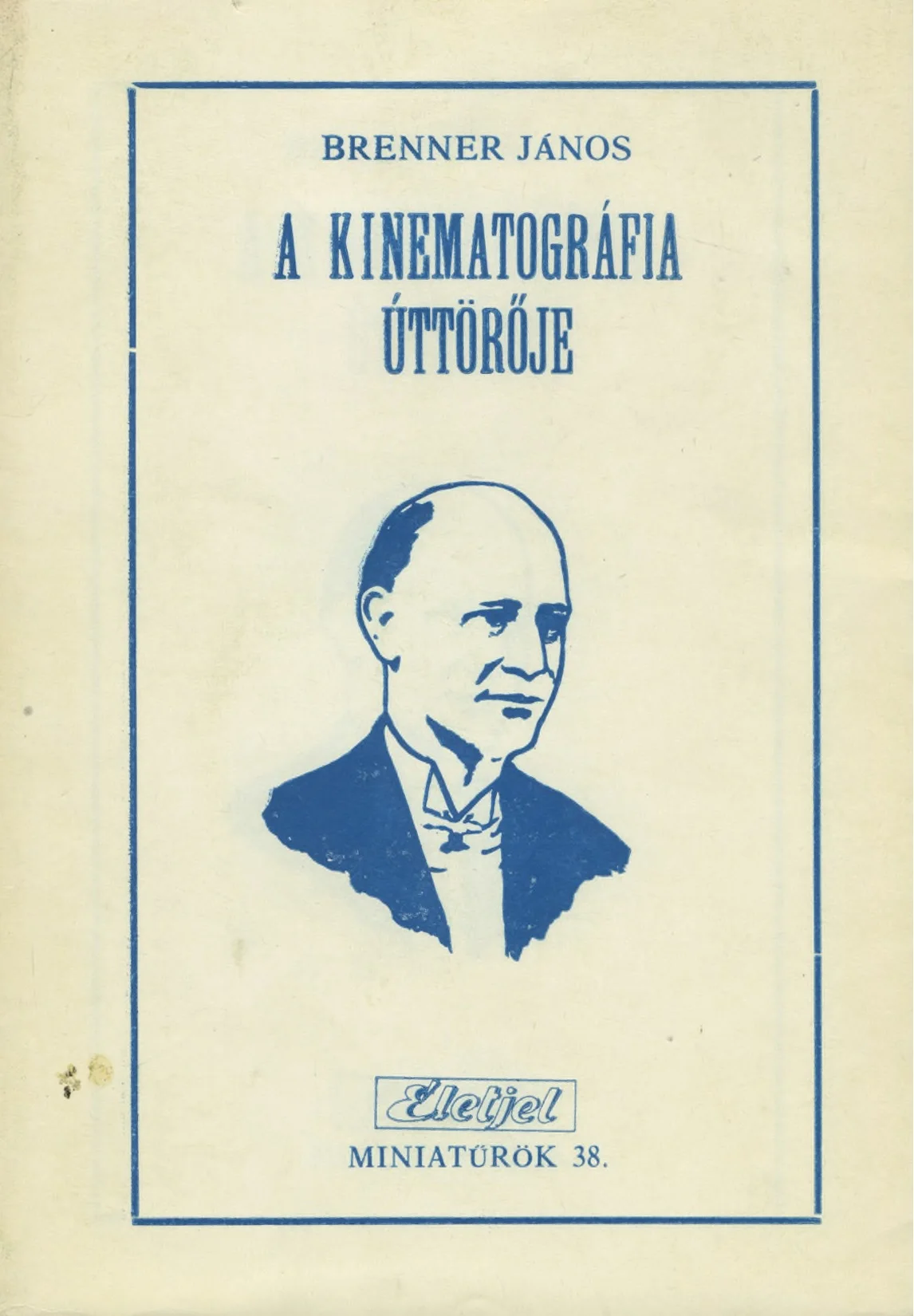
- Author:
- Brenner János
- Year and place of publication:
- 1982,Subotica
- Publisher:
- Veljko Vlahović Munkásegyetem
- Responsible publisher:
- Burzan, Ilija
- Series title:
- Életjel Miniatűrök
- Page count:
- 76 pages
- Art form:
- epic poetry
- Genre:
- Biography
- Subject terms:
- cinematographyfilmingcinemaSándor Lifka
Flap Text
The original aim of this small book was not simply to describe the life of Sándor Lifka, who passed away thirty years ago. To do so, it would have been enough to speak with his family members, relatives, and acquaintances. Nor was it to present him as the country's first cinema operator. This book sought to prove, beyond any doubt, that Sándor Lifka made the first films in Yugoslavia, depicting Yugoslav landscapes and people.
When János Brenner, a journalist for 7 Nap and former editor of the paper's film section, undertook this work with such ambition, he believed it would be an easy task. He would go to the Subotica City Library, look up early 20th-century newspapers, read several articles stating that the audience recognized themselves, their city, and their surroundings while watching the program, and thus have his proof. If the audience recognized themselves, it could only have been through films made by Sándor Lifka himself, as the master's cameras, purchased in 1900 and 1904, are preserved in the Belgrade Film Museum, and he undoubtedly acquired them for filming purposes. He found no such text in Subotica, so he went to Szeged, then Budapest, and from there returned to Ljubljana and Belgrade, where Sándor Lifka's lavishly illuminated cinema was admired everywhere, and his presented program was deemed sensational – yet not a single piece of data that could have been used as proof was found. Recollections are not evidence; Lifka's films were melted down into glue by the manager of the Bata store in Subotica, and his awards and diplomas did not state when the honored reels were made.
Nevertheless, the endeavor cannot be considered unsuccessful. Perhaps it will pique the interest of someone with more money and time for research than a journalist, and it may also open the – seemingly closed – dossier concerning the beginnings of Yugoslav filmmaking.
And put things in their proper place within it...