



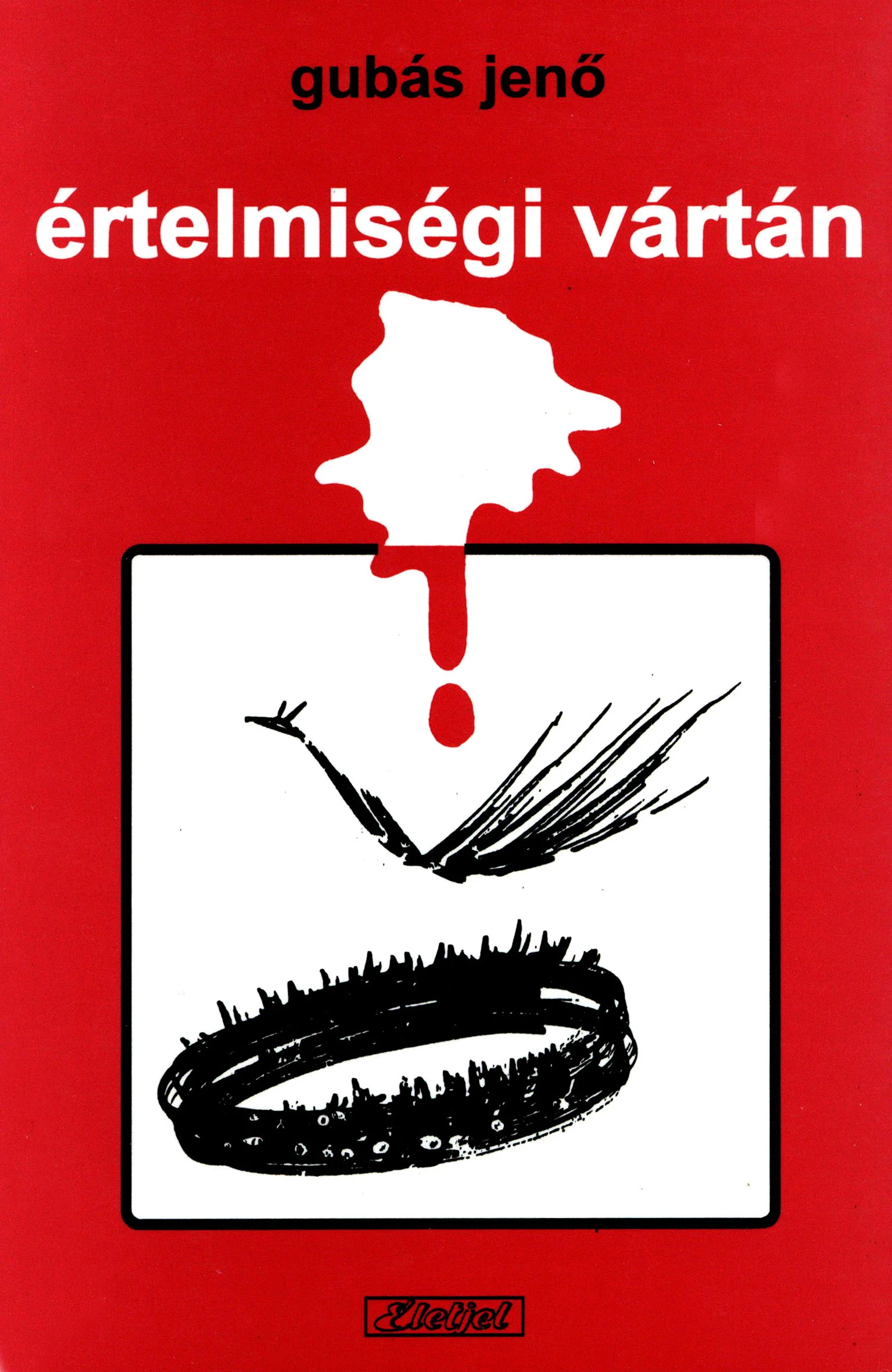
- Author:
- Gubás Jenő
- Year and place of publication:
- 1994,Subotica
- Publisher:
- Szabadkai Szabadegyetem
- Responsible publisher:
- Perović, Blažo
- Series title:
- Életjel Könyvek
- ISBN:
- 86-82147-05-X
- Page count:
- 162 pages
- Genre:
- Journalism
Preface/Afterword
FOREWORD
The changes in Central Europe in the 1990s did not, and could not, pass without leaving their mark on the attitude, manifestations, value system, and image of the Hungarian intelligentsia in Yugoslavia. Among the former actors, some fell silent, forced into passivity, while those condemned to silence gained a voice, initiating a process of re-evaluation. Political organization also began, but while the Hungarian communities in Transylvania and Upper Hungary had politicians like László Tőkés or Miklós Duray, who began and undertook the struggle for Hungarian interests even during the much more dangerous communist era—for which, and for their moral stance, they were persecuted by the then-authorities—the political struggle of the Hungarian community in Vojvodina was mostly led by politicians who held high state positions during the communist period and were, among other things, implementers of the oppression of the Hungarian community in Yugoslavia. However, this cunning leadership recognized the possibilities of political changes in time, changed direction early, and took the lead in the political struggle of the Hungarian community in Vojvodina, riding on these social changes, primarily for their own careers. This was one, and perhaps the most decisive, reason why a significant group of intellectuals not compromised during the communist era was unwilling to associate with this turncoat leadership, which left the interest organization without an intellectual layer.
The small number of educated professionals who, prioritizing Hungarian interests, were willing to accept membership and mandates despite the aforementioned, increasingly found themselves sidelined and pushed out of the VMDK due to the leadership's old Bolshevik, unprincipled accusatory and voting-down methods. The void was filled with gray, opinionless, easily influenced individuals who perfectly fit into their voting machine inherited from the Bolshevik era. This is how the Hungarian community in Yugoslavia reached the most critical period of its post-war political struggle, the consequences of which only the future will reveal.
More than seventy years of minority existence, and within that, nearly fifty years of the communist period, have caused such deep wounds in the soul of the Hungarian intelligentsia in Yugoslavia that in many cases they hinder ethical behavior, conscious national commitment, brave advocacy for the nation, the recognition of the importance of additional performance necessarily stemming from the minority situation, etc., but most importantly, unity for the sake of the nation. This intellectual layer has fragmented into countless interest groups, and if it cannot soon find itself and act in an organized manner, it could be fatal for the Hungarian community in Yugoslavia.
This book attempts to illuminate the several years of turmoil, formation, and manifestations of the Hungarian intelligentsia in Yugoslavia, compiled from a selection of articles published in daily, weekly, and monthly newspapers of that period. Therefore, it does not possess a unified line of thought, but in its unique way, it is likely to highlight and provide an explanation for the behavior of this intellectual group in the early 1990s. However, just as from a close perspective one cannot assess the size and quality of a forest from the trees, similarly, it is impossible to correctly judge the events of our days or the recent past without errors. It is certain that some statements in the book may not stand the test of time, even if, when they were put on paper, with the knowledge available at the time, these opinions seemed correct and logical. Naturally, posterity will judge and evaluate them more accurately from an appropriate historical perspective.
Subotica, February 26, 1994.
Flap Text
The changes in Central Europe in the 1990s did not, and could not, pass without leaving their mark on the attitude, manifestations, value system, and overall image of the Hungarian intelligentsia in Yugoslavia. Similarly, the external and internal political conditions, as well as the living circumstances, that determine the situation, cultural, political, and economic opportunities of the Hungarian minority in Yugoslavia—and not only in Yugoslavia—as well as the resulting tasks and its entire future, have changed. The intelligentsia plays a significant role in shaping these influences, and through its exemplary conduct and active involvement, it can greatly influence the positive or negative direction of these social and political changes. However, seventy years of minority existence, and within that, fifty years of the communist period, have caused such deep wounds in the soul of the Hungarian intelligentsia in Yugoslavia that in many cases they hinder ethical behavior, conscious national commitment, brave advocacy for the nation, the recognition of the importance of additional performance stemming from the minority situation, but most importantly, the necessity of unity. This intellectual layer has fragmented into countless interest groups, and if it cannot soon find itself and act in an organized manner, it could be fatal for the Hungarian community in Yugoslavia.
***
Our book aims to shed light on the debates and problems that have taken place within the Hungarian intelligentsia in Yugoslavia in recent years, with its material compiled from articles published in weekly and monthly journals. It not only illuminates but also explains the intellectual manifestations and turmoils that characterized this period.
Our volume is divided into five parts. The first discusses the relationship between the intelligentsia and morality, the second explores attempts at unity, the third addresses responsibility towards the minority, the fourth examines the obligations of the media towards minorities, and the fifth is a concluding report on the situation of Hungarians in Yugoslavia. It is possible that the author has insights and conclusions that may not stand the test of time, but it is certain that when they were put on paper, these seemed correct and logical, and that it is impossible to assess the social and political events of the present or recent past without errors. In other words: there is no doubt that, looking back at the past few years from an appropriate historical perspective, we will be able to judge these statements more accurately. Nevertheless, Értelmiségi vártán (On Intellectual Watch) is not only a thought-provoking read but also a valuable contemporary document about the events and phenomena of the first half of the nineties that also shaped our national consciousness.
Table of Contents
- ELŐSZÓ
- I. ÉRTELMISÉG ÉS ERKÖLCS
- A jugoszláviai magyarság jelenéről és jövőjéről9
- Szellemi megtorlásunk napjai17
- A jugoszláviai magyar értelmiség problémái28
- Reál-humán36
- Az értelmiség feladata, hogy sikerre vigye a minőség forradalmát43
- A kritikák kritikája47
- II. KÍSÉRLET AZ ÉRTELMISÉG ÖSSZEFOGÁSÁRA
- Indítvány egy vajdasági Szárszó létrehozására53
- Javaslatok egy délvidéki Szárszó arculatához59
- Válasz T. L.-nek és B. L.-nek65
- Hozzászólás a vajdasági magyar értelmiség tóthfalui tanácskozásához67
- III. ÉRTELMISÉG ÉS KISEBBSÉG
- Kisebbségek vonzásban és taszításban75
- Bűn és bűnhődés 1. (Szolgalélekkel nem lehet jövőt építeni)79
- Bűn és bűnhődés II. (Válaszlevél egy magyar tanítónőnek; Eretnek gondolatok az oktatásról; Vak vezet világtalant)84
- Bűn és bűnhődés III. (Az egykézésről; A rossz családmodell)91
- Bűn és bűnhődés IV. (A jugoszláviai magyarság társadalomegészségügyének problémáiról)99
- Bűn és bűnhődés V. (A vajdasági magyarság gazdasági esélyei; Gazdaság, politika, féltékenység)105
- Bűn és bűnhődés VI. (A vajdasági magyarság a rendszerváltás forgatagában)115
- Bűn és bűnhődés VII. (Értelmiségünk hallja-e a lélekharangot?)119
- IV. ÉRTELMISÉGI VÁRTÁN
- Ajánlás a művelődési egyesületek népművelési programjához127
- Újságírás, erkölcs és nemzettudat131
- Egy tévéstúdió arculatáról134
- Nyílt levél a 7 Nap szerkesztőségének137
- Jóízlésés nemzettudat141
- Kallódó értékeink144
- Vita, népszaporulat és a lényeg147
- V. UTÓSZÓ
- Zárójelentés a jugoszláviai magyarság helyzetéről155