
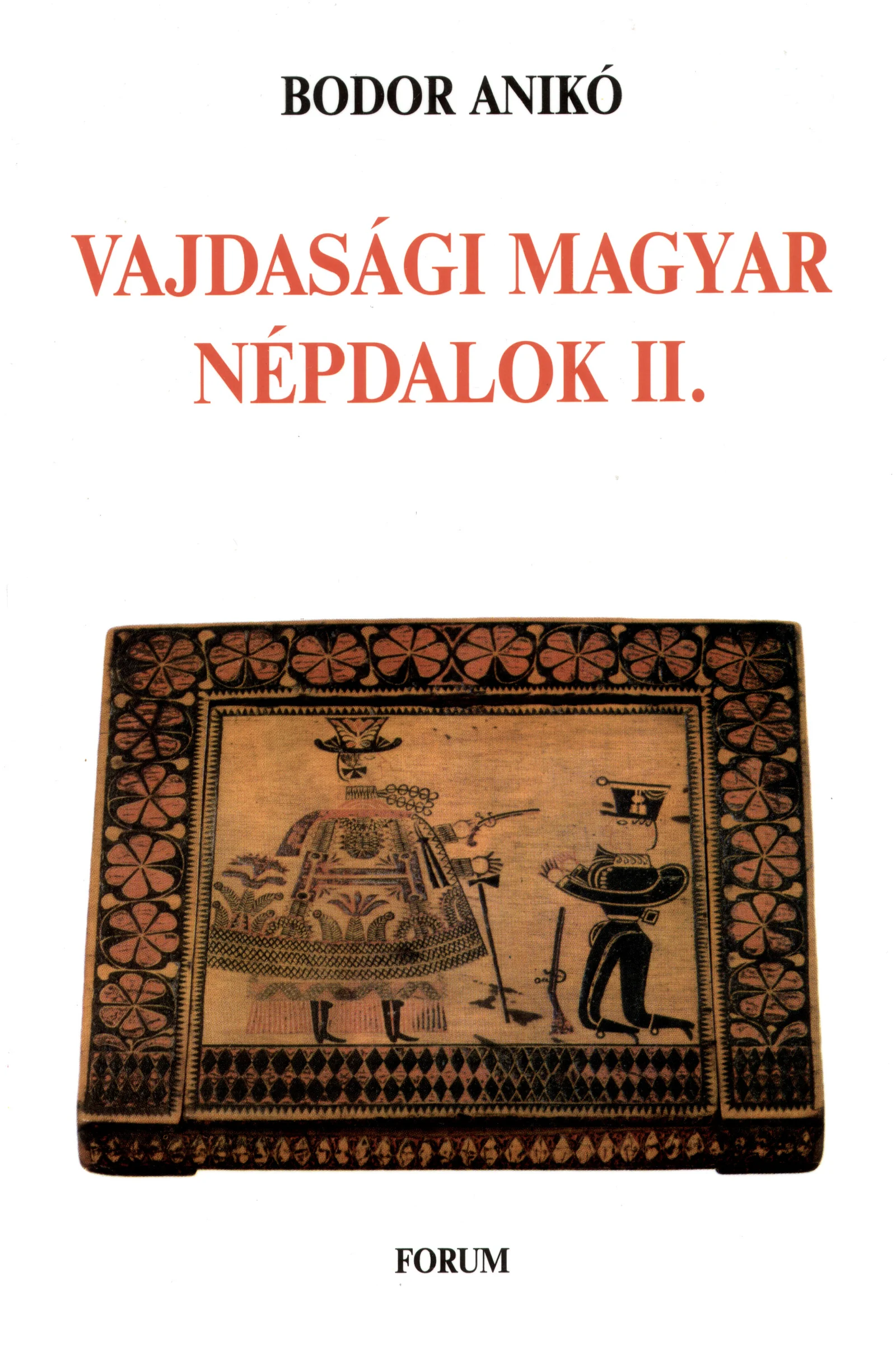
- Author:
- Bodor Anikó
- Year and place of publication:
- 1999,Senta, Novi Sad
- Publisher:
- Thurzó Lajos Művelődési–Oktatási Központ, Forum Könyvkiadó Intézet
- Responsible publisher:
- Bordás Győző
- ISBN:
- 86-323-0499-2
- Binding:
- soft
- Page count:
- 549 pages
- Art form:
- lyric poetry
- Genre:
- Folk song collection
Preface/Afterword
FOREWORD
Following the lyrical songs of the first volume, the second volume of the four-volume planned series, "Vajdasági magyar népdalok" (Hungarian Folk Songs of Vojvodina), presents a selection of ballads, outlaw and shepherd songs to the folk music-loving public. The aim of the series is to comprehensively introduce and popularize the Hungarian folk song heritage of Vojvodina. Once again, we strive to present a tradition whose texts and melodies rightfully represent the folk music values not only of Vojvodina but of the entire Hungarian nation.
The previously published materials and ongoing collections make it possible to survey and make a representative selection of the ballads, outlaw and shepherd songs of the diverse Hungarian population in Vojvodina. We cannot aim for completeness even now, although the collected material is very extensive, it is not evenly distributed geographically. We have tried, where possible, to represent as many accessible Hungarian-inhabited places as possible. On the other hand, the incidental melodies of the ballad types found here are not all necessarily worthy of popularization, as not all of them equally represent the core layer of the folk music tradition.
The material in this volume largely covers our oldest folk music heritage, which has now been almost completely erased from the memory of tradition bearers by the new style of folk songs and changed lifestyles. It is only exceptionally heard in folk practice. This material represents exceptional value not only in its melodies and texts but also in its performance style. “He only half knows our musical mother tongue who does not have a complete picture of the folk song, formed from original auditory perceptions, who has heard little or nothing directly from the people.” “Interpretation from paper or second-hand (...) is insufficient in terms of performance style and understanding.” “Traditional performance style disappears and perishes much faster than the associated melodic material; although to varying degrees by region, age group, and even individual” – writes Imre Olsvai. For a more complete understanding, we include audio material with the volume. This will hopefully help our young folk music enthusiasts to cope with the performance of songs that may seem difficult to them. This mode of expression, along with its innate melodic material, did not only supply the musical life of the people. “It is still connected to life, to the life of all of us today. It contains the seed, the plan of a great national musical culture. It is the task of the educated class to develop and complete this. But it will only have the strength to do so in spiritual unity with the people. To become a nation, we must first become a people again and again.” “The forms of tradition may change, but its essence remains the same as long as the people whose soul it expresses live.” The folk song “is very often a masterpiece (...). It is not primitiveness, but art refined and distilled through millennia of development. It is perfect because the culture that created it is a balanced unity” – writes Zoltán Kodály.
The Vojvodina Hungarian folk music archive, established within the framework of the Hungarian Cultural Association of Yugoslavia and the City Museum of Senta with the support of the Illyés Public Foundation, was of great help in compiling our volume. This made it possible to review the source material and select authentic audio examples illustrating the performance. Thanks are also due to the staff of the Folk Music Department of the Institute of Musicology of the Hungarian Academy of Sciences, who provided indispensable and valuable assistance in this work.
Our second volume contains 382 ballads, outlaw and shepherd songs with 206 melodies, encompassing a total of approximately 680 variants. We hope that the reader will find as much joy in the selection as the compiler of the volume's material. And may the recordings illustrating the performance, despite their technical and human imperfections, provide an enjoyable auditory experience and serve a more complete understanding of style and authentic, uncorrupted interpretation. We wish you much success in bringing them back to life! All of them represent our precious folk music values, worthy of being integrated into our public culture, and a valuable contribution of the Hungarians of Vojvodina to the entire Hungarian folk music heritage.
Author Qualifications
Bori Imre
Reviewer
Hajnal Jenő
Reviewer
Toldi Éva
Editor
Buzás Márta
Text editor
Buzás Márta
Corrector
Dévai Irén
Musical notation graphics
Varga Judit
Musical notation graphics
Király Zsiga
Artwork on cover
Pálfi Attila
Cover design
Jánosi Irma
Computer preparation
Balogh Erzsébet
Computer preparation
Valkay Zoltán
Maps drawn by
Table of Contents
- Előszó5
- Bevezető7
- Ballada-, betyár- és pásztordalgyűjtések a Vajdaságban7
- A vajdasági magyar népballadák, betyár- és pásztordalok 9
- A vajdasági magyar balladák, betyár- és pásztordalok dallamainak jellemzői15
- A közreadás szempontjai23
- A kötet anyagának gyűjtői29
- Betű- és zenei jelek30
- KÖZÉPKORI BALLADÁK (1–51. sz.)
- LEGENDABALLADÁK (1–7. sz.)
- Három árva (1–5. sz.)
- 1. Túl a vízen egy almafa (Hertelendyfalva)33
- 2. Túl a vízen egy diófa (Hertelendyfalva) 34
- 2. a Túl a Tiszán egy almafa (Hertelendyfalva)35
- 3. Amoda mén három árva (Szaján/Magyarkanizsa)36
- 3. a Amoda mén három árva Ipirumba (Száján)37
- 3. b Elmönt, elmönt három árva (Magyarszentmárton) 38
- 4. A temető kapujába (Oroszlámos, Hódegyháza, Magyarpadé, Topolya)40
- 5. Az adai temetőbe (Oromhegyes, Horgos, Felsőhegy, Zentagunaras, Topolya, Mohol, Titel, Hódegyháza, Oroszlámos, Törökbecse) 41
- Árvák éneke (6. sz.)
- 6. Sír egy árva kint a temetőbe (Oromhegyes) 43
- Szálláskereső Jézus (7. sz.)
- 7. Mikor az Úr Jézus (Királyhalom, Gombos) 45
- TRAGIKUS BALLADÁK (8–34. sz.)
- Szégyenbe esett lány (8–11. sz.)
- 8. Erdőbe lakok én (Csóka)49
- 8. a Jó estét, barna lány (Oromhegyes)50
- 8. b Jó estét, jó estét (Mérges)51
- 9. Hegyek közt lakozok (Satrinca)52
- 10. Egyszer egy asszonynak (Bácskertes) 53
- 10. a Egyszer egy asszonynak (Bácskertes) 55
- 11. Egy szegény asszonynak (Oromhegyes, Völgyes, Zentagunaras, Topolya, Bajsa)58
- 11. a Egyszer egy asszonynak (Csóka, Magyarmajdány, Zenta)62
- 11. b Egy édesanyának (Magyarmajdány, Csóka, Törökkanizsa, Hódegyháza, Egyházaskér, Száján, Törökbecse).65
- 11. c Egyszer egy asszonynak (Temerin, Mohol, Zenta, Horgos)68
- 11. d Egyszer egy asszonynak (Gombos) 70
- 11. e Kati lányom, Kati (Szaján)72
- Zsivány felesége (12–13. sz.)
- 12. Hunyadi Benedek (Hertelendyfalva) 75
- 13. Verje meg az Isten (Hertelendyfalva, Székelykeve)78
- Háromszoros magzatgyilkos (14. sz.)
- 14. Szabó Vilma kiment az erdőbe (Egyházaskér)80
- Halálra táncoltatott lány (15–19. sz.)
- 15. Jó estét, jó estét (Doroszló, Gombos)83
- 16. Jó estét, jó estét (Bácsgyulafalva, Gombos, Bácskertes)85
- 16. a Jó estét, jó estét (Bácskertes) 88
- 17. Jó estét, jó estét (Alsóittebe)89
- 17. a Jó estét, jó estét (Rábé)90
- 18. Jó estét, jó estét, Csáki bíróasszony (Hódegyháza, Felsőhegy, Temerin)92
- 19. Jó estét, jó estét, Csáki bíróasszony (Topolya)94
- Halálraítélt húga (20–28. sz.)
- 20. Fehér László lovat lopott (Székelykeve) 96
- 81. Lovat lopott Fehér László (Hertelendyfalva)98
- 22. Rajta, rajta, Gönc városa (Hódegyháza)100
- 23. Fehér László lovat lopott (Ludas)101
- 24. Fehér László lovat lopott (Topolya)103
- 25. Fehér László lovat lopott (Dobradó) 105
- 26. Fehér László lovat lopott (Törökkanizsa)107
- 26. a A Fekete halom alatt (Magyarpécska) 110
- 27. Fehér László lovat lopott (Szaján/Magyarkanizsa) 112
- 28. Fehér László lovat lopott (Bácsföldvár)114
- Megszólaló halott (29–34. sz.)
- 29. Megölték a legényt (Egyházaskér, Hertelendyfalva) 117
- 29. a Megöltek egy legényt (Ludas/Hajdújárás) 119
- 30. Megöltek egy legényt (Magyarkanizsa, Temerin)120
- 30. a Megöltek egy legényt (Mohol, Egyházaskér)122
- 31. Megöltek egy legényt (Gombos, Szilágyi, Topolya) 123
- 32. Megöltek egy legényt (Magyarpadé, Szaján)125
- 32. a Megöltek egy legényt (Szaján)127
- 33. Megöltek egy legényt (Titel, Ürög) 128
- 34. Megöltek egy legényt (Bácskertes) 129
- VÍGBALLADÁK (35–51.sz.)
- Szeretet próbája (35–40. sz.)
- 35. Szógátam, szógátam Maros kútja mellett (Szaján)131
- 36. Jó napot, jó napot (Mohol)134
- 37. Jó reggelt, jó reggelt (Törökkanizsa) 136
- 38. Szolgáltam, szolgáltam (Topolya) 138
- 38. a Kebelembe búvék (Mohol)140
- 39. Amoda szolgálok (Csóka) 141
- 40. Mérges sárkánykígyó (Bocsár)142
- Révészek nótája (41–46. sz.)
- 41. Ej, szívem, révészem (Gombos)145
- 42. Angyalom, révészem, vigyél át a vízen (Gombos)146
- 43. Révészek, révészek (Magyarmajdány, Magyarmajdány/Csóka) 147
- 44. Hej, révészek, révészek (Egyházaskér) 148
- 45. Révészek, révészek (Mohol)150
- 45. Révészek, révészek (Magyarszentmárton)151
- 46. Hej, révészem, révészem (Mohol) 153
- Kétféle menyasszony (47. sz.)
- 47. Kéretik a nénémet egy király legénynek (Törökkanizsa) 155
- 47. a Viszik már a nénémet a király fiához (Magyarpécska) 157
- 47. b Kérik már a nénémet (Szaján) 158
- Cinegemadár (48. sz.)
- 48. Hol jártál az éjjel, cinegemadár (Gombos)160
- 48. a Hun háltál az éjjel, cinögemadár (Hosszúhát/Horgos)161
- Gunaras lány (49–51. sz.)
- 49. Kihajtottam én a libám (Feketetó) 163
- 50. Lehajtottam a libámat a Gyöngyszigetre (Ada, Zenta, Felsőhegy, Oromhegyes) 164
- 51. Kihajtottam a libámat a Gyöngyszigetre (Martonos/Kanizsa)166
- BALLADASZERŰ RÉGI ÉNEKEK (52–54. sz.)
- Tücsöklakodalom (52–53. sz.)
- 52. A mezőbe a tücsök készül házasodni (Hertelendyfalva, Székelykeve) 168
- 53. A kis tücsök, a kis tücsök házasodni kezdett (Bácskertes)169
- Kádár István históriás éneke (54. sz.)
- 54. Szörnyű nagy romlásra készült Pannónia (Hertelendyfalva)173
- XIX. SZÁZADI PONYVABALLADÁK (55–56. sz.)
- Kiirtott kocsmároscsalád (55–56. sz.)
- BETYÁRBALLADÁK (57–121. sz.)
- Bogár Imre (57–63. sz.)
- 57. Zavaros a Tisza (Egyházaskér, Mohol, Topolya)183
- 57. a Zavaros a Tisza (Bácskertes)185
- 58. Zavaros a Tisza (Oroszlámos, Egyházaskér)187
- 59. Zavaros a Tisza (Zenta, Péterréve, Bácsföldvár) 189
- 59. a Zavaros a Tisza (Topolya) 191
- 60. Harangoznak délre (Gombos, Bácskertes)192
- 61. Zavaros a Tisza (Törökkanizsa, Szaján)193
- 61. a Zavaros a Tisza (Bácskertes) 196
- 62. Zavaros a Tisza (Zentagunaras, Topolya)198
- 63. Zavaros a Tisza vize, nem akar apadni (Gombos)200
- Lám, megmondtam, Angyal Bandi (64. sz.)
- 64. Zúg az erdő, zúg a mező (Horgos)202
- Jó ló volt a fakó (65–66. sz.)
- 65. Mikor Barna Péter (Hertelendyfalva)204
- 65. a Mikor Barna Péter (Hertelendyfalva)206
- 66. A Lengyel Palinak (Gombos)207
- Lova lába megbotlott (67–71. sz.)
- 67. Búra, búra, búbánatra születtem (Horgos) 209
- 67. a Kocsmárosné, tíz liter bort hozzon kend (Topolya)211
- 68. Kocsmárosné, nekem halat adjék kend (Horgos)212
- 68. a Kocsmárosné, ejnye, ejnye, de ejnye (Ludas) 214
- 68. b Amoda van egy nagy kapu kerítés (Magyarmajdány) 215
- 69. Kocsmárosné, bort hozzon kend kupába (Ludas)216
- 69. a Lina néni, halpaprikást főzzön kend (Gombos)218
- 70. Csejó Pista kis ünneplő csizmája (Doroszló)219
- 71. Esik eső, szép csendesen csepereg (Topolya)220
- A betyár utazólevele (12–11. sz.)
- 72. Nem loptam én életembe (Hertelendyfalva)222
- 73. Csütörtökön virradóra (Csóka, Szaján) 223
- 73. a Volt egy lovam, egy szíjhátú (Csóka, Mokrin, Szaján) 225
- 74. Mikor mentem hazafelé (Gombos)226
- 75. Tisza szélén elaludtam (Magyarmajdány, Torontáltorda)227
- 75. a Tisza partján elaludtam (Csóka, Mohol, Maradék)229
- 75. b Tisza partján elaludtam (Horgos, Királyhalom)230
- 75. c Tisza partján elaludtam (Gombos)231
- 76. Tisza szélén elaludtam (Egyházaskér) 232
- 77. Csütörtökön virradóra (Bácskossuthfalva)233
- A betyár lányruhában (18. sz.)
- 78. Jáger Jóska híres betyár (Kevi) 235
- Ki sem megyek, meg sem adom magam (19–85. sz.)
- 79. Nem messze van ide Kismargita (Horgos)237
- 79. a Nem messze van ide Kismargita (Szeged)239
- 80. Nem messze van ide Kismargita (Bácskertes)240
- 80. a Nem messze van ide Kismargita (Doroszló) 241
- 81. Nem messze van ide Kismargita (Oroszlámos, Rábé) 242
- 82. Kocsmárosné, ejnye, ejnye, ejnye (Ludas)244
- 82. a Nem messze van ide Kismargita (Bácskertes)246
- 83. Nem messze van ide Kismargita (Oromhegyes) 247
- 84. Nem messze van ide Kismargita (Doroszló) 249
- 85. Nem messze van ide Kismargita (Hertelendyfalva)250
- Szilaj csikó nem eladó (86–90. sz.)
- 86. Tisza szélén elaludtam (Martonos, Felsőhegy) 253
- 87. Nem jó erdő mellett lakni (Horgos) 255
- 88. Tisza partján elaludtam (Bácskertes) 256
- 89. Tisza partján elaludtam (Topolya, Oromhegyes)257
- 89. Tisza partján elaludtam (Ürög) 259
- 90. Duna-parton elaludtam (Bácskertes, Gombos)260
- Nem akar a vezérürüm legelni (91–95. sz.)
- 91. Nem akar a vezérürüm legelni (Bácsföldvár)263
- 91. a Nem akar a vezérürüm legelni (Zenta, Magyarpadé)264
- 92. Nem akar a vezérürüm legelni (Oromhegyes) 265
- 92. a Nem akar a vezérürüm legelni (Oromhegyes)267
- 93. Nem akar a vezérürüm legelni (Gombos)268
- 94. Nem akar a vezérürüm legelni (Doroszló) 271
- 95. Nem akar az ökörgulyám legelni (Ludas/Hajdújárás)272
- Lóra, csikós (96–99. sz.)
- 96. Lóra, csikós, lóra (Horgos)274
- 97. Lóra, csikós, lóra (Gombos)275
- 98. Lóra, csikós, lóra (Észak-Bácska) 277
- 99. Lóra, csikós, lóra (Horgos)279
- Rabénekek (100–121. sz.)
- 100. Ha felmegyek Kecskemétre (Zenta, Mohol) 282
- 101. Kisbácskai hármas határ (Zenta)283
- 102. Este jön a tömlöctartó (Horgos, Bajsa) 284
- 102. a Tisza partján elaludtam (Alföld)285
- 103. Hallottad-e hírét (Oroszlámos)286
- 103. a Amerre én járok (Egyházaskér) 287
- 104. Hallották-e hírét (Magyarpadé)288
- 104. a Amoda van egy ház (Szaján) 289
- 105. Ki hallotta hírét (Törökkanizsa)290
- 106. Fújdogál a szellő (Zenta, Csóka/Nagyatád)292
- 106. a Udvarom, udvarom (Szaján) 294
- 107. Van énnékem csizmám (Zenta) 295
- 108. Szabadkai kórház hatsoros ablaka (Bajsa)297
- 109. Jászberényi kórház (Bácskossuthfalva)299
- 110. Repülj, madár, repülj (Bácsgyulafalva)300
- 111. Búra termő idő (Horgos) 302
- 112. Fúdd el szép nótádat, Anador szép Anna (Hertelendyfalva)304
- 113. Szomorúfűzfának harminchárom ága (Székelykeve)306
- 114. Harminc esztendeje, negyvenedik járja (Szaján)307
- 114. a Bújdosik a holdfény felhő tengerében (Csóka) 309
- 114. b Hallottad-e hírét Zalaegerszegnek (Bajsa) 310
- 115. Fürdik a holdvilág (Csóka)311
- 116. Erdő, erdő, kerek erdő (Mohol)313
- 117. Erdő közepébe (Mohol)314
- 118. Repülj, madár, repülj (Gombos)315
- 119. Repülj, madár, repülj (Káty, Temerin)316
- 120. Sej, amoda kerekedik egy fekete felhő (Gombos, Zenta) 317
- 121. Amott sötétellik (Oromhegyes)318
- 121. a Amott kerekedik (Rábé)319
- ÚJ BALLADÁK (122–132. sz.)
- A bárólány és a juhász (122. sz.)
- 122. Nyitva van a Szendre báró ablaka (Zenta, Szaján)322
- 122. a Túl a Tiszán, kis szendrőci határba (Beodra/Egyházaskér)324
- A bárólány és a gulyás (123–125. sz.)
- 123. Ha fölmegyek a bugaci halomra (Zentagunaras)326
- 124. Szépen legel a kisasszony gulyája (Bajmok, Topolya, Ürményháza) 328
- 125. Vezérürüm nem akar legelni (Horgos)329
- A gyilkos feladja magát (126–127. sz.)
- 126. Barna Jancsit arra kéri babája (Horgos)332
- 126. a Jaj, de széles, jaj, de hosszú ez az út (Tamásfalva-Hetény)333
- 127. Jaj, de széles, jaj, de hosszú ez az út (Bácskertes)334
- A cséplőgépbe esett lány (128–129. sz.)
- 128. Ezernyolcszáznyolcvanhatodik évbe (Ludas, Oromhegyes, Felsőhegy, Topolya, Titel, Törökbecse)336
- 129. Ezernyolcszáznyolcvanhatodik évbe (Egyházaskér)338
- Gyere, babám, váltsál ki (130–132. sz.)
- 130. Telecskai bírónak (Bácsgyulafalva)340
- 131. A horgosi bírónak (Királyhalom, Topolya)341
- 132. Szabadkai bírónak (Ludas, Doroszló) 342
- 132. a Széles az ökröm szarva (Endrőd)343
- BETYÁRDALOK, PÁSZTORDALOK (133–205. sz.)
- Betyár vagyok, betyár vagyok (133–141. sz.)
- 133. Rúzsa Sándor az én nevem (Egyházaskér, Ludas, Oromhegyes) 349
- 133. a Csütörtökön virradóra (Horgos)351
- 133. b Csütörtökön virradóra (Topolya) 352
- 133. c Jó napot, édes bojtárom (Mohol, Magyarkanizsa)353
- 133. d Ezen a sötét éjszakán (Törökbecse)354
- 133. e Amoda egy kerek erdő (Kanizsamonostor) 355
- 133. f Mikor én kicsike voltam (Hódegyháza)356
- 133. g Uccu, Bihor, Szabó, Szakmár (Alföld)357
- 134. A mindenit ennek a rossz világnak (Gombos)358
- 135. Csárdába ért engem a komiszáros (Eszak-Bácska, Mohol)359
- 135. a Ha fölülök kis pej lovam hátára (Alföld)351
- 136. Betyár vagyok, Angyal Bandi a nevem (Egyházaskér, Bácskertes, Hertelendyfalva)362
- 136. a Patkó Bandi harminchat szél gatyája (Alföld)364
- 137. Mikor Rózsa Sándor (Hertelendyfalva)365
- 137. a Mikor Rózsa Sándor (Zenta) 366
- 137. b Zavaros a Tisza (Magyarpadé)367
- 137. c Vásárhelyi pusztán (Pusztaföldvár) 368
- 138. Szegény Rózsa Sándor (Bácskertes) 369
- 138. a Szegény Rózsa Sándor (Gyála) 370
- 139. Régen halltam ezt a szelet fújni (Bácskertes, Csóka, Magyarszentmihály)371
- 140. Betyár vagyok, betyár vagyok (Zenta, Topolya, Székelykeve)373
- 141. Én már többet éjszaka nem járok (Csóka, Mohol)374
- Betyár alatt szépen ropog a tarack (142–149. sz.)
- 142. Ha fölmegyek a fekete halomra (Csóka)375
- 142. a Ha fölülök a bugaci halomra (Szeged)377
- 143. Haragosan szól az ürüm harangja (Csóka, Terján)378
- 144. Betyár alatt szépen ropog a tarack (Oromhegyes)380
- 145. Betyár alatt szépen ropog a tarack (Völgyes) 382
- 146. Környes-körül zöldellenek a hegyek (Zenta, Csonoplya, Hertelendyfalva) 384
- 147. Új a csizmám, magas sarkú, szegedi (Szaján, Hódegyháza, Csóka)386
- 147. a Beszállottam az alföldi csárdába (Alföld) 388
- 148. Túl a Tiszán zöld erdőbe születtem (Hertelendyfalva) 389
- 149. Édesanyám, adja ki a jussomat (Gombos)390
- Amott legel, amott legel (150–158. sz.)
- 150. Amott legel két pár csikó csapatba (Kevi)391
- 151. Túl a Tiszán van hat csikó magába (Szaján) 393
- 152. Amott legel, amott legel, amott legel hat pej csikó magába (Csóka, Völgyes)395
- 153. Amott legel hat pej csikó magába (Gombos)397
- 154. Ha felülök a csacsimra nagy búsan (Ludas)398
- 155. A távolba, jaj, de csörög a béklyó (Mohol, Ludas) 399
- 156. Ha fölülök szamaramra nagy búsan (Bácskertes) 400
- 157. Esik eső, sáros lesz a nagyutca (Székelykeve)401
- 158. Esik eső, sáros lesz a nagyutca (Horgos, Gombos) 402
- Iszik a betyár a csapon (159–171. sz.)
- 159. Kocsmárosné, hallja (Bácskertes) 404
- 160. Kondorosi csárda előtt van egy szomorúfűzfa (Csóka)405
- 161. Kondorosi szép csárdásné háza előtt szomorúfűzfa lehajlik (Dobradó) 407
- 161. a Kondorosi csárda előtt van egy szomorúfűzfa (Mohol, Zenta) 409
- 161. b Kondorosi szép csárdásné, adjon Isten jó napot (Törökfalu)410
- 161. c Kondorosi csárda mellett van egy szomorúfűzfa (Törökfalu/Zenta)411
- 162. Hortobágyi kocsmárosné, angyalom (Mohol)412
- 163. Jó bort iszok, diófával tüzelek (Völgyes, Horgos, Kishomok, Ludas, Hajdújárás)413
- 164. Sej, haj, kocsmárosné, bort hozzon hitelbe (Ludas)415
- 165. Kutyakaparási csárda (Topolya, Bácsgyulafalva, Csonoplya, Zenta,Magyarkanizsa, Oromhegyes, Királyhalom, Egyházaskér, Felsőmuzslya)416
- 166. Kutyakaparási csárda (Egyházaskér, Száján, Székelykeve, Doroszló) 418
- 167. Iszik a betyár a csapon (Szenttamás)420
- 167. a Feketicsi ragyás csárda (Bácsfeketehegy) 421
- 168. Száraz kútgém, üres vályú (Völgyes, Királyhalom, Bajmok, Csóka) 422
- 168. Kondorosi csárda mellett (Horgos) 424
- 169. Szentmiklósi dombok alatt (Zenta) 425
- 170. Száraz kútgém, üres vályú (Bácskossuthfalva) 426
- 171. Kutyakaparási csárda (Egyházaskér)427
- 171. a Száraz kútgém, üres vályú (Oromhegyes) 428
- Ma két hete, vagy már három (172–179. sz.)
- 172. Ma két hete, vagy már három (Kispiac, Ludas)429
- 172. a Amoda jön, amint látom (Bácsgyulafalva)431
- 173. Száraz a kenyér, üres a bakó (Zenta)432
- 174. Hozd ki, babám, a kantárom (Szaján) 433
- 174. a Jó nap Isten, jó bojtárom (Szaján) 434
- 175. Két napja múlt, vagy már három (Horgos) 435
- 175. a Már két hete, vagy hogy három (Horgos)436
- 175. b Vagy két hete, vagy már három (Zenta)437
- 175. c Már két hete, vagyis három (Felsőhegy)438
- 176. Ma két hete, vagy már három (Csóka)439
- 176. a Van két hete, vagy már három (Mohol) 441
- 176. b Vagy két hete, vagy már három (Mohol)442
- 177. A bugaci ürünyája (Horgos)443
- 178. A bugaci ürüfalka (Horgos)445
- 178. a Megszaladt a falka nyájam (Alföld)446
- 179. Ma két hete, vagy már három (Mohol, Temerin)447
- 179. a Már két hete, avagy három (Gombos) 449
- Esteledik, alkonyodik (180–182. sz.)
- 180. Esteledik, alkonyodik (Csóka, Mohol) 450
- 181. Esteledik, alkonyodik (Völgyes) 451
- 182. Esteledik, alkonyodik (Horgos)452
- 182. a Esik eső, hajnalodik (Horgos) 453
- 182. b Esteledik, alkonyodik (Csóka, Mohol)454
- Kis pacsirta a magasba (183–192. sz.)
- 183. Kis pacsirta a magasba (Mohol)455
- 184. Esik eső, fújja, hordja (Törökkanizsa, Mohol)456
- 185. Bújdosik az árva madár (Csóka, Doroszló)457
- 185. a Magasan jár (a) nap az égen (Csóka)458
- 185. b Pásztor vagyok az Alföldön (Völgyes, Mohol) 459
- 186. Este van már, hetet ütött az óra (Horgos, Piros)460
- 187. Kis alpári gulyáslegény (Piros, Bácsfeketehegy)461
- 187. a A szegedi juhászlegény (Csóka, Zobnatica)462
- 188. Sándorházi gulyáslegény (Hertelendyfalva) 463
- 189. A horgosi csikóslegény én vagyok (Ludas, Hajdújárás) 464
- 190. Túl a Tiszán csikóslegény vagyok én (Völgyes, Kispiac, Horgos, Kevi, Zenta, Bácsgyulafalva, Doroszló, Gombos, Szilágyi, Maradék, Firigyháza, Hódegyháza)466
- 191. Elveszett a kis pej lovam citrusfa erdőbe (Mohol) 468
- 192. Elvesztettem a kis pej lovam kikindai zöld erdőbe (Szaján)470
- Juhászlegény a pusztába (193–198. sz.)
- 193. De a juhász a pusztába (Mohol)471
- 194. Juhászlegény a pusztába (Csóka, Zenta) 473
- 195. Nem szánt-vet az égi madár (Oromhegyes)474
- 195. a Alkonyodik, még sincs este (Oromhegyes) 475
- 196. Juhászlegény a pusztába (Hódegyháza/Ada, Csóka)476
- 197. Betyár gyerek az erdőbe (Völgyes, Kevi) 477
- 197. a A mezei bús pacsirta (Oromhegyes)478
- 198. Juhászlegény a pusztába (Mohol) 479
- Összeveszett vélem a csősz (199–200. sz.)
- 199. Összeveszett velem a csősz (Királyhalom) 480
- 200. Összeveszett vélem a csősz (Csóka) 481
- Nem bánom, hogy juhásznak születtem (201–205. sz.)
- 201. Nem bánom, hogy szegénynek születtem (Völgyes)482
- 201. a Nem bánom, hogy parasztnak születtem (Horgos)484
- 201. b Nem bánom, hogy juhásznak születtem (Horgos, Kispiac)485
- 202. Nem bánom, hogy juhásznak születtem (Zenta) 486
- 202. a Nem bánom, hogy juhásznak születtem (Zenta, Csóka) 487
- 202. b Nem bánom, hogy szegénynek születtem (Magyarkanizsa, Ludas)488
- 203. Nem bánom, hogy gulyásnak születtem (Kispiac, Mohol)489
- 204. A juhászok így élnek, úgy élnek (Zenta) 491
- 205. Ikhárella, bikhárella (juhásztánc) (Oromhegyes)493
- MUTATÓK
- Térképek495
- Énekesek500
- Rövidítések502
- Irodalom, források504
- Lemezek, kazetták506
- A dalok lelőhelyei507
- Zenei mutatók510
- Szótagszámmutató510
- Sorzárlatmutató512
- A kezdő sorok betűrendes mutatója515
- A dalok forrásjegyzéke525
- Balladatípusok (Vargyas Lajos felosztása szerint)533
- Tájszavak, kevésbé ismert kifejezések535
- A hangzó mellékletek jegyzéke537