



- Author:
- Csúszó Dezső
- Year and place of publication:
- 2004,Subotica
- Publisher:
- Szabadkai Szabadegyetem
- Responsible publisher:
- Perović, Blažo
- Series title:
- Életjel Könyvek
- ISBN:
- 86-82147-60-2
- Page count:
- 213 pages
- Genre:
- Monograph
- Subject terms:
- SuboticaKelebiaTavankutVeliki RadinciGheorgheniLocal historyCrossesPublic crosses19th century20th century
Preface/Afterword
INTRODUCTION
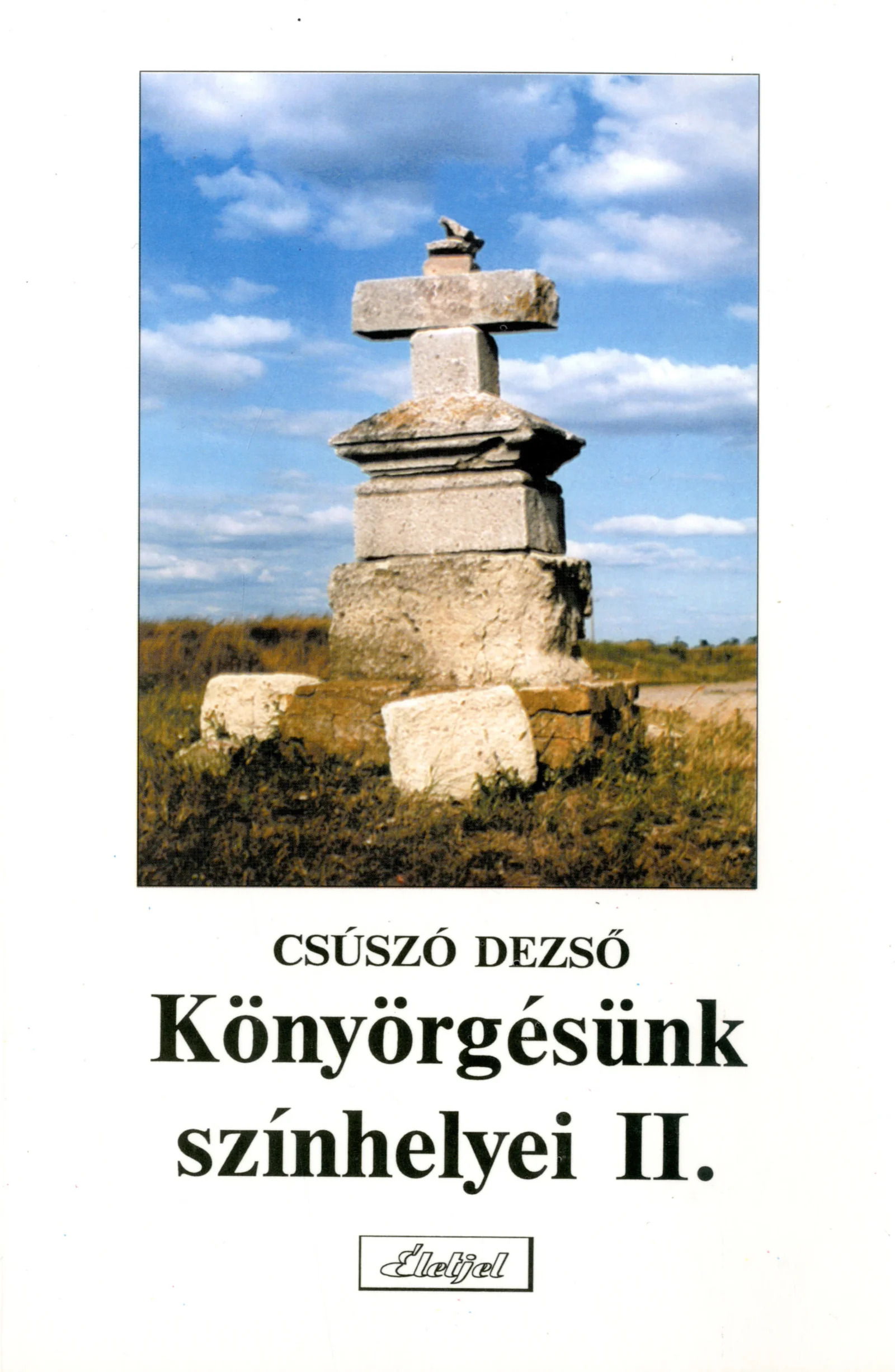
In the second part of this work, following the concept defined in the first volume, I present the public crosses erected on various puszta areas of the city, specifically those in Kelebia, Sebesić, Tavankut, Vámtelek, Đurđin, and Mala Bosna, which were raised in the 19th-20th centuries.
Bearing in mind that the public crosses listed, most of which still exist today, were erected in the aforementioned centuries, I continue to consider their contemporary boundaries, even though these partially changed in the twentieth century due to well-known historical circumstances. Besides the internal shifts of the puszta boundaries, I would only mention Kelebia and Sebesić here, whose northern parts remained within the territory of Hungary.
The crosses, which were originally boundary, roadside, or puszta crosses at the time of their erection, now stand on the streets and squares of villages, because in the twentieth century, the former rows of farmsteads (settlements with farmsteads) gradually developed into villages, in which separate parishes were founded. However, at the time of the cross erections in the 19th century, the entire region belonged to the city's St. Teresa Parish, a fact that also simplifies archival research.
In the preparation of this work, I also used the sources from the first volume: the cross registers of Ferenc Pacher, Alajos Demerácz, Gábor Tormásy, István Iványi, Mátyás Mamuzsich, and Mátyás Mokossay. I continue to publish the inscriptions on the crosses and the archival sources verbatim, and I write the names as they appear in these inscriptions and contemporary documents, occasionally omitting the relevant, currently valid Hungarian spelling rules.
Table of Contents
- Bevezető5
- Kelebia7
- Szent Apostolok-templom29
- Sebesics31
- Szentháromság-templom80
- Tavankút83
- Felsőtavankúti közkeresztek86
- Felsőtavankúti temető99
- Szent Anna-kápolna104
- Alsótavankúti közkeresztek106
- Alsótavankúti temető128
- Jézus Szíve-templom131
- Vámtelek135
- Györgyén157
- Szent József a Munkás-templom185
- Nagyfény189
- Nagyfényi temető209
- Szent Márk-tamplom210
- Forrásmunkák214
- Keresztmutató215
- Tartalom217