



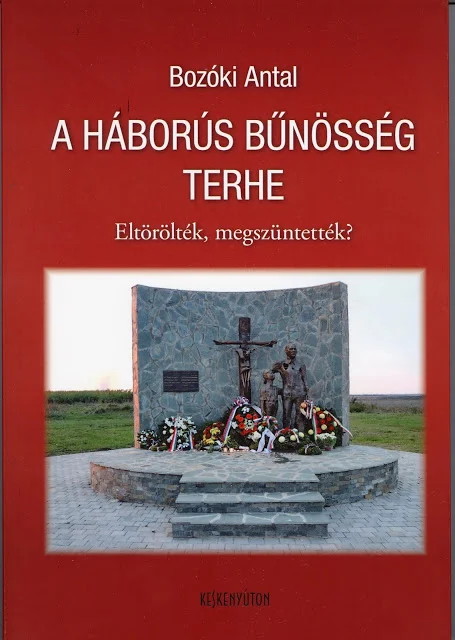
- Author:
- Bozóki Antal
- Year and place of publication:
- 2017,Budapest
- Publisher:
- Keskenyúton Délvidéki Tragédiánk 1944-45 Alapítvány
- ISBN:
- 978-615-80348-5-2
- Binding:
- soft
- Page count:
- 262 pages
Flap Text
Let us appreciate situation reports. Situation reports are like the indispensable, now classic chronicles that report on bygone times: detailed and crucial, if not vital, accounts from which events can not only be learned, but also understood, processed, and perhaps most importantly – further contemplated. And most of all: they incite action and protection. Situation reports are the requisites of agonizingly difficult battles and heroic victories won in fierce clashes. They are the glorious and therefore immortal wreaths of sacrifice, placing struggles and torments at our feet. They are documents that are not only evidence, but also heavily substantiated (counter-)accusations. Weapons of self-defense, every single one of them. Heavy artillery guns recapturing castles, rocket strikes repelling insidious, sniper attacks. Let us appreciate situation reports.
Antal Bozóki’s situation reports follow one after another like grenade launchers. The Hungarian Community in Serbia, The Right to the Homeland, The Situation and Rights of Hungarians in Délvidék/Vojvodina, and the others: each is a sad and at the same time infuriating overview of a situation that, despite all deceptive appearances, Balkan maneuvering, and various forms of swindling, does not seem to change much. Just like the constantly applied terrible stigma, the most humiliating and outrageous label: collective guilt, the brand of a “guilty,” “fascist” people and nation. Even the more informed attribute this rare, evil slander technique to Beneš, the former Czech president – although one could look elsewhere for the real culprits... Just as in the treacherous, terrible battlefield terrain revealed in Bozóki’s latest volume: how and why rehabilitations and reparations are fudged by all those whose duty it would be, what an astonishing hassle, a terrifying level and intensity of procrastination has been going on for years in these matters. And the victims, of course, almost need not be said or written: mostly, for the most part, Hungarians.
Bozóki reports on all this. He reports. He presents the situation. Let us appreciate situation reports.
Domonkos László