Csantavér népoktatása
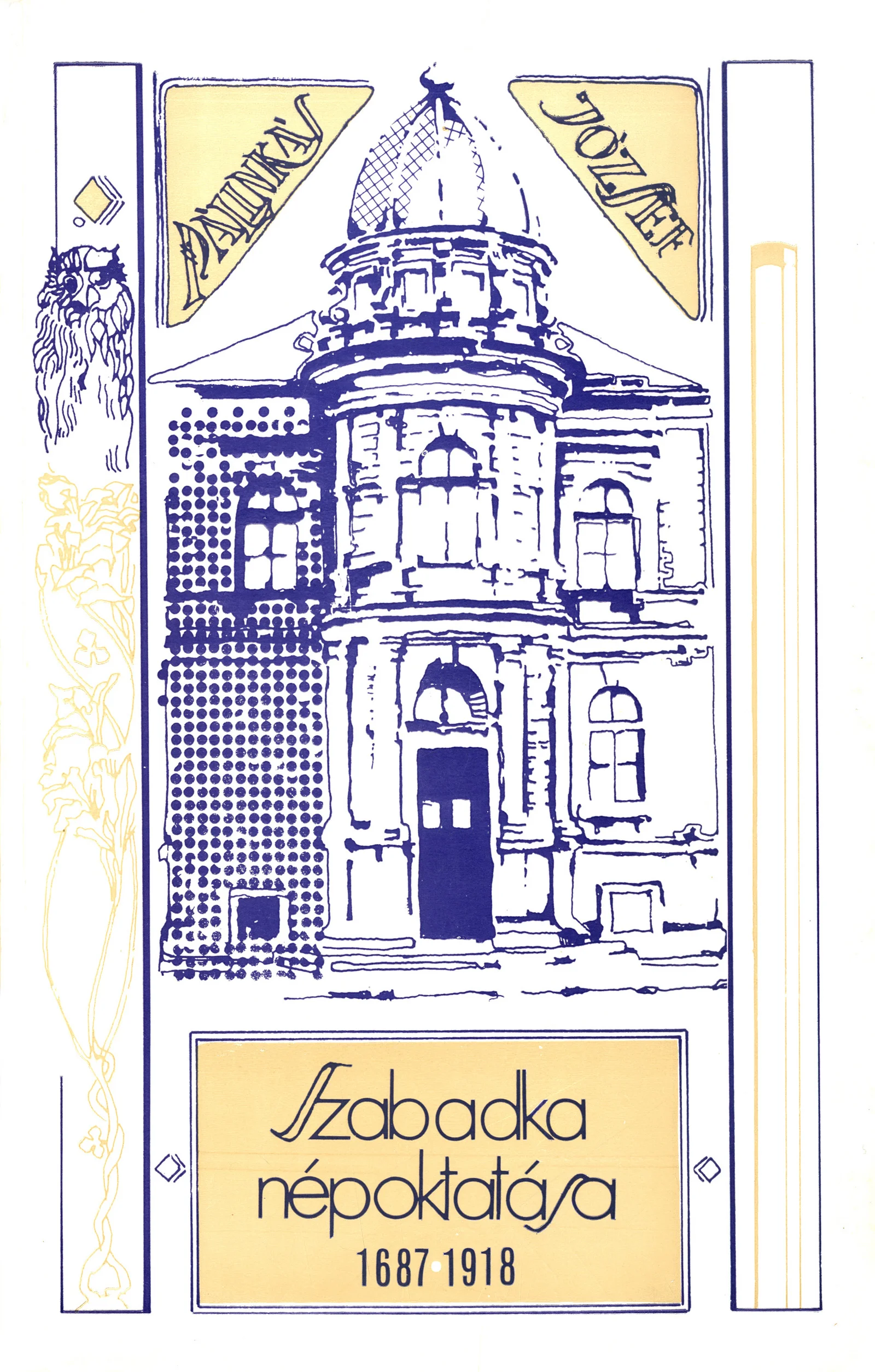
Author:Year and place of publication:1985, Novi Sad, ČantavirGenre:StudyPublisher:Forum Könyvkiadó Intézet, Néphősök Általános Iskola

HISTORY AND PEDAGOGY
Writing an afterword is a thankless task. We can easily fall into the trap of forcing our own opinion on the reader. After someone has finished reading the book, they form a definite opinion for themselves. The afterword follows this like a cold shower. I admit that a cold shower is sometimes refreshing, but often it causes teeth-chattering. It may draw the reader's attention to new aspects, it may teach (because afterwords hardly escape pedagogizing), but this teaching has always aroused doubts in me. It aroused doubts because it can hardly avoid the danger of becoming some kind of »higher judge«. Whether it praises the author of the work, whether it scolds them, whether it simply reinterprets it, if..., well, it always seems a bit condescending. This condescension is twofold: it affects the author of the work, but even more so it affects the reader; and it is not good if someone else gives the answer to the often unasked question: »How should I think, how should I feel here?«. And whoever is unable to independently draw conclusions from the work itself, is either still a student – and in that case, the material cannot be explained to them in a few pages –, or it was pointless for them to read it.
Therefore, an afterword usually only makes sense if it is argumentative. And if it is argumentative, then it must either analyze the presented work using the tools of so-called immanent criticism, or it must criticize it from some point of view. A comparative analysis can also be a good approach.
In the case of József Pálinkás, I could not apply any of these methods. Immanent criticism would mean that I fully accept the author's fundamental positions and, moving within them, make further-reaching corrections, striving for dialectical transcendence. We have neither the time nor the expertise to do this sufficiently. Criticism from a point of view would require that, while rejecting the author's views, we simultaneously develop our own understanding, which we confront with the criticized work. If we do not do this, our criticism will be dogmatic negation, or slavish apology, incense-burning. A serious author and a serious, demanding reader do not need this, but neither can the writer of the afterword allow themselves to do so, unless they are too conceited.
A comparative analysis would mean another dissertation.
Well, then what is left after all? Is it possible to write an afterword that is not an expanded version of the table of contents, not a short biography, not a collection of flowery words, but still wants to say something; still wants to pedagogize, but not »from above«.
I thought that perhaps I could still comment on the work, which – I can now say – we have all read, without repeating myself, if I talk about what the book – every single book and not just this one – silently speaks, provided it is made to speak. This message relates to the interesting problem of the method and the idea, the theoretical starting point of the presentation. This message usually remains in the background, because the reader is primarily interested in the facts presented. I was the same with this book. It revealed an unknown, already sunken world to me. It aroused wonder and interest in me. Only well after the novelty of the first reading experience did I ask myself: »Okay, this is all very nice, but you saw it with different eyes. Is the researcher's individual opinion merely an individual opinion, or is it scientifically objective? If the latter, then does the so-called scientific objectivity not conceal the bad partisanship of pretending to be impartial? If not, then does its ideological commitment represent the interests of progress, of humanity? In short, does this book teach anything? Does its gaze into the past teach us to see the present and reveal the future? Does its root-seeking work help us to wisely guide our future lives?
Perhaps there is someone who says that these requirements are too great. The author has written about a partial problem, a local problem: the teacher training in a city in the Great Hungarian Plain is not a world-shattering matter. It is for bookworms, and perhaps it is good for rummaging among old things; it evokes pleasant, slightly bitter revulsions, small giggles, tiny sighs in people. The breeze of the past makes us shiver and whispers: »Time passes!«. It murmurs: »You see how bad it was, you see how good it was, you see how foolish it was, etc.« – depending on what lives in someone's soul. At the same time, it creates a pleasant feeling in us: »It's good that I'm just watching all this!«.
But all this is a mistake. It is so, but this is only the appearance, the surface, the exterior; behind it, there are immense forces. The historian must show these forces. But they must also show (they must make us feel!!!) how we can use these eternal – changing only in their age, space, and form – forces for the benefit of us all today: for the present and the future.
(...)
Excerpt from the afterword by Dr. Ferenc Bodrogvári
While researching the distant sources of various manifestations of social, economic, and cultural life, the question of when regular public education began in Szabadka has arisen in several studies, diary entries, and critical reports. After all, the slow development of the market town also demanded replenishment in social, economic, and health terms; therefore, there was a need for literate people from whom the town could raise its cadres in accordance with the requirements of development: to elevate its people to the level of human life.
József Pálinkás's book, Szabadka népoktatása [Public Education in Szabadka], is a work of immeasurable value in this regard. He hinted in his introduction that all his efforts were aimed at exploring the origins of public education in an area that the period covered in his book – more than two hundred years – had been held back by wars, occupations, and natural disasters behind other, happier cities and regions.
The other extremely important aspect, to which the author paid particular attention, is that a multi-ethnic population lived in this city, and since in the first decades – even centuries – the initiators, patrons, founders, and caretakers of the schools were largely the denominational churches, the composition and nature of the initial small educational institutions were divided, and accordingly, so was their teaching program.
Whichever chapter the reader opens in this book, which contains a wealth of data, they will find sections that draw attention to countless, subsurface moments in the city's folk life, and also reveal that within the walls of the old city, even a few generations ago, there were free-spirited people who fought courageously for the expansion and proliferation of public education against the bigoted-minded »literate people«, »parish council members«, servile philistines, and those who underestimated or did not value the people who wanted to learn to read and write: because for them, it was important that the people work, and then they would direct them.
Therefore – but not only for this! – a valuable work for every reader leaves the press following József Pálinkás's research, and precisely because of the aforementioned, the hoped-for response fills us with the belief that we will soon encounter more similarly valuable works published by Életjel.