



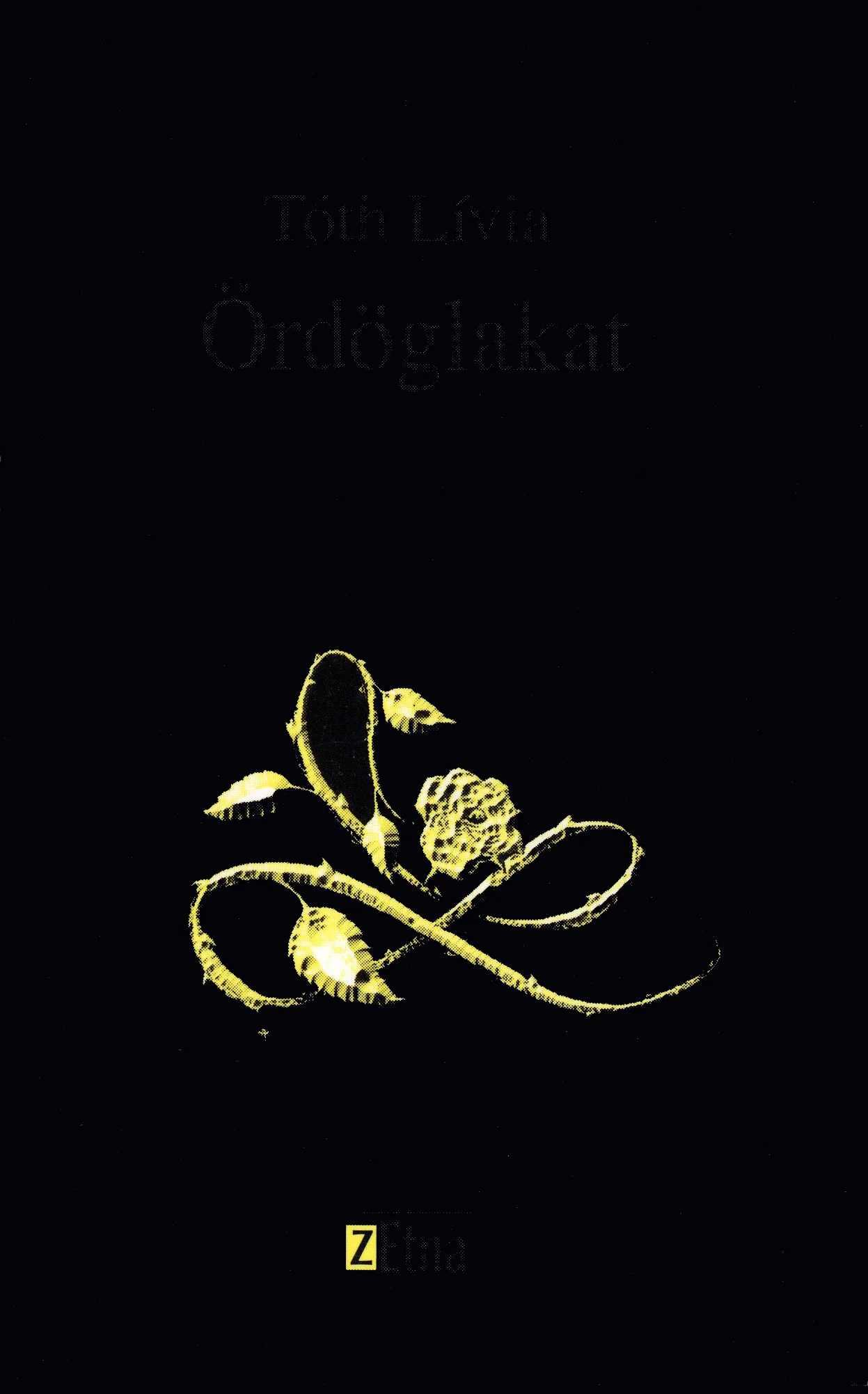
- Author:
- Tóth Lívia
- Year and place of publication:
- 2002,Senta
- Publisher:
- zEtna
- Responsible publisher:
- Beszédes István
- Series title:
- Vulkáni Helikon
- ISBN:
- 86-84339-00-2
- Binding:
- soft
- Page count:
- 107 pages
- Genre:
- Short prose
The author's portrait was made by Attila Szabó
Preface/Afterword
Afterword
How evident and obvious it is: “He noticed it before, but now it strikes him again: there is a new era. Before the war, or rather the wars – they used to say, then came the phrase ‘during the bombings’, but ‘ten years ago’, ‘a decade ago’ are also among the more popular expressions. Yet more than the days of the yogurt have passed. Currently, life is divided into before and after October – according to the more optimistic, before and after the revolution” – yet he is the first to describe this as a chronology, just in time, before collective amnesia sets in again, against which Lívia Tóth has already taken memorable steps. This is why we love her book Köszönöm, jól! (Thank you, I’m fine!). It would be logical to say now that it is the continuation of the first volume of her new work, yet we would be mistaken, because it is only so in terms of its perspective. It would not be so evident precisely because, in terms of its genre, Ördöglakat (Devil's Lock) is much more complex; we cannot unreservedly put it into the “journalism” box. Not that it is a contemptible genre, but now we must speak of a step forward. The structure and composition of the text are definitely more serious, suggesting the ambition of a marked step towards belles-lettres. And again, it must be stated that Lívia Tóth has “invented” her own genre, her own world, in which she speaks authentically. The dynamism of the structure is given by the alternation of perspectives. The author's audacity is evident when she shows the same existential environment from the perspective of a dog (too); since Jack London's novel The Call of the Wild, this is not new, yet now we feel the allusion to be authentic, as Alaska will be discussed more specifically later. This feat continues with Lili Karácsonyi, who “as if” picks up the thread dropped by the dog and carries it forward, passing it to the narrator's alter ego, whom the narrator presents in the third person singular. But Lili Karácsonyi also appears in the third person singular. As if we get to know everyone from both outside and inside. All this, however, only seems so complicated when analyzed; when reading the text, it does not detract from comprehensibility. We know exactly what it is about: a family living its everyday life, yet what makes the story special is, on the one hand, to be found in the peculiar intellectual situation and existence, and on the other hand, in the manner of description; the negation of the codedness and falseness of the environment is formulated here from the perspective of a (journalistic) writer. The embraced honesty and outspokenness elevate this micro-community with its life segments from its environment. These eventually fragment into letters, small maxims, and messages, behind which lurks the politics that, with its decomposition products, was able to infiltrate even the joints of the best intentions and most intimate human relationships.
Ferenc Kontra
Author Qualifications
Table of Contents
- A túloldal (bevezető helyett)5
- Egymásra morgó bábok a kiporciózott életben8
- Az ökörré válás története17
- A kutya naplója26
- Karácsonyi Lili naplója31
- A kutya és a gazda (álom)naplója34
- Mostoha folytatás35
- Fényképalbumok37
- Évforduló45
- A tehetségesek igénytelensége 47
- Karácsonyi Lili álma az asztalon53
- Dobozok56
- Decemberben Alaszkáról álmodik63
- Karácsonyi Lili esete néhány pasassal70
- Rövid, de annál taknyosabb családtörténet74
- Fekete zsákok80
- Levelek91
- Leltár103
- Utószó107