



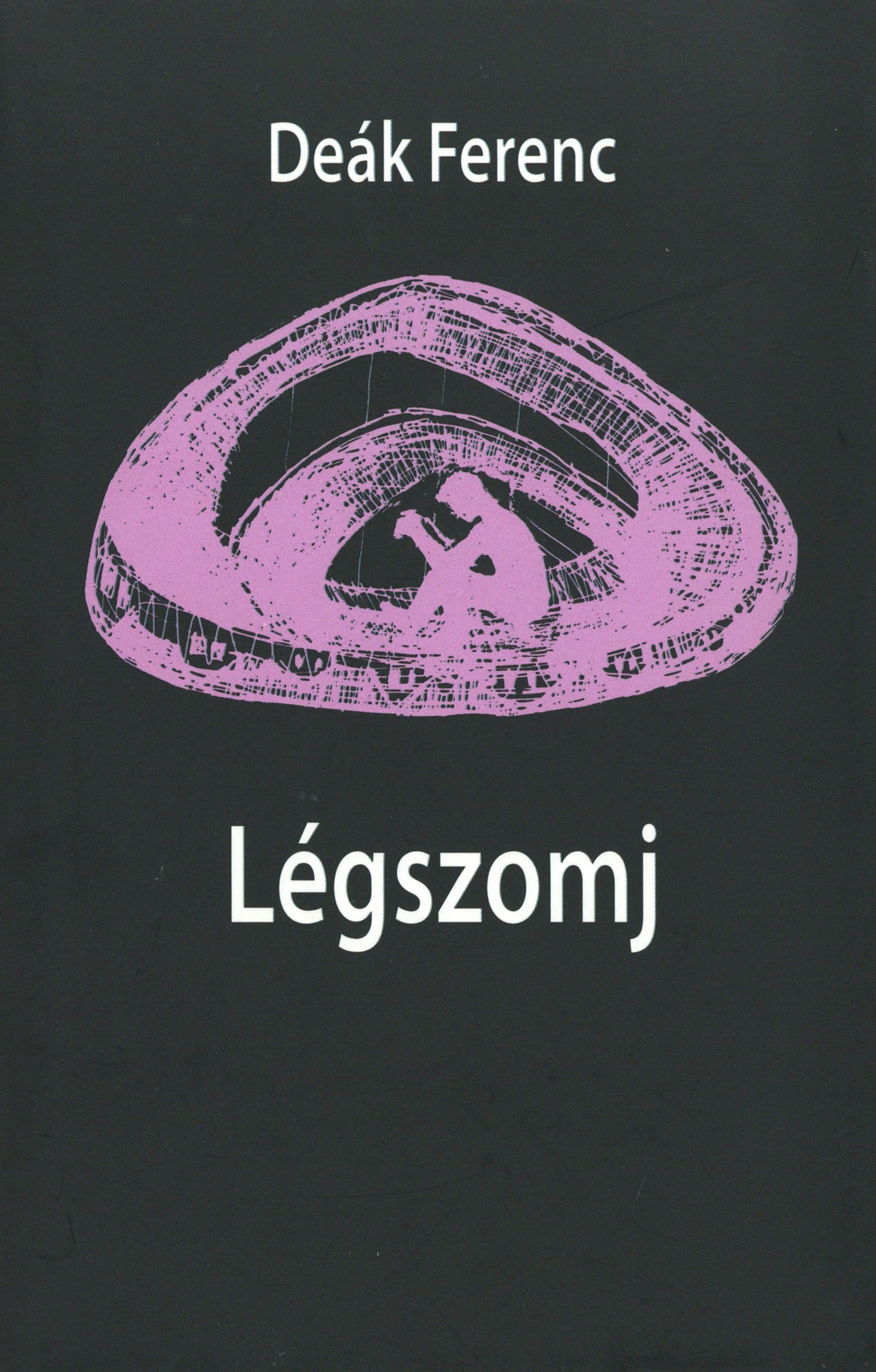
- Author:
- Deák Ferenc
- Year and place of publication:
- 2009,Subotica
- Publisher:
- Szabadkai Szabadegyetem
- Responsible publisher:
- Perović, Blažo
- Series title:
- Életjel Könyvek
- ISBN:
- 978-86-87613-05-8
- Binding:
- soft
- Page count:
- 132 pages
- Art form:
- Drama
Preface/Afterword
INSTEAD OF A PREFACE
Why are Ferenc Deák's dramas still relevant?
Ferenc Deák was the first to bring a new color to Vojvodina Hungarian drama literature with his two most significant works, Áfonyák (Blueberries) and Légszomj (Breathlessness). The shared feeling in these works is that of "suffocation." The heroes come into conflict with the social reality that surrounds them. Existence becomes oppressive for them; they would flee, but cannot, because betrayal occurs from all sides. There is no deviation from the designated path or place, no departure, so these mostly intellectual heroes try to live with the oppressive and anxious feeling of suffocation and breathlessness.
In the dramatic situation reflecting social reality, hope does not even begin to take shape. Here, evil has escaped its confinement and spread, while good has become a minority, left alone. This pessimistic worldview leads to the oppressive feeling of life.
"Good" suffocates among the intimidated masses surrounding it. It is surrounded by individuals burdened by the events of historical past, who carry within themselves the entirety of social problems from 1941 to 1969, from nationalization to resettlement and the nationality question.
To be precise: Donát, the just and clear-sighted man, summarizing the multifaceted complaints, aptly notes: "To play history with you..." - for a history is hidden in this mass, and yet this mass does not fit into "the chorus of great nations." A feeling of resignation and habit takes over: "Because it's all habit. The laziness and the anger because of it, the talk about family, funerals, taxes. Existence here with you, indeed, that too is just habit now."
Hence the conclusion: "The dead have no name, no nationality, no denomination, only worms in their loins, finally even in their hearts, their guts... That diligent folk. The pacifist without nationality! I am not the pacifist! They are, over there!"
This drama is undoubtedly an expressionist work. This movement is the most suitable for expressing social messages. Instead of merely depicting the appearance of reality, the writer primarily expresses his feelings and thoughts about reality, directly, without any cautionary interjections or constraints. Expressionism is the era when the silenced revolutionary voice can once again find expression, expressionism tears open the mouth of humanity again, because enough time has passed since the dramatic hero openly, without any "dream level" or mystical symbols, states the real, current problems. Thus it becomes understandable that the era of Them, the nameless chameleon figures, has arrived, when only the assimilated, compromising individual can live and thrive carelessly. The ending of the drama reflects the writer's worldview: "Why do you expect me to speak understandable words when you live an incomprehensible, meaningless, and irrational life! I admit: I am your little uncomfortable illness, the shameful relative... But one thing is certain: we will all suffocate together, if..." The hero embodying "truth" and "good" does not finish the sentence; everyone must finish it for themselves. However, it suggests two possibilities. One is if the heroes do not change their petty, compromising lives, dwelling on past grievances, or if they do not assimilate, if they do not become Them!
Ferenc Deák opened a new chapter in Vojvodina Hungarian drama literature: he introduced the openness of expressionism and the motif of existentialism, alienation. No one else in our region created dramatic forms and styles besides him. It is no coincidence that Dr. János Bányai notes the following about his dramas: "One of the most striking features of Deák's literature is his experimental spirit: always finding new and new forms to convey his message." Or as our academician, Imre Bori, writes about him: "...we must see in him a true dramatist of our literature: the dramatic form became his fundamental means of expression."
Why are Ferenc Deák's dramas still relevant?
Well, if we return to the basic tenet of Deák's existential philosophy, we can state that existence, which we grasp through instincts, represents reality. And we know that this is indeed the case, because we are part of reality, and because of all this, we are breathless!
Since the era determined both the content and the fate of Légszomj (its print-ready book version was pulped in 1971, and later only a truncated version could reach the wider public), in my opinion, the salvaged, original text of the drama should be duly classified among our classical works and – with appropriate accompanying text – definitely published as a book.
Zsuzsanna FRANYÓ
Novi Sad, November 20, 2008.
***
A paradigmatic event in the history of our literature
The history of Ferenc Deák's three-part drama, Légszomj (Breathlessness), contains contradictory events, starting from its disqualification (due to lack of anonymity) from the 1970 play competition – through moments that provoked political outrage and audience reactions – to the success of its premiere in Subotica in 1971; perhaps it is not an exaggeration to associate the meaning of "legendary" with its reception.
The drama, which portrays the life of a Vojvodina (minority) peasant family amidst the untenable and contradictory ideologies and system operations of the time, and its theatrical version, undoubtedly belong among the paradigmatic (and even era-defining!) events in the history of our literature (and regional theater history). Its significance in the genre category is as valid and substantial as, for example, Nándor Gion's Testvérem, Joáb (My Brother, Joab) in the history of the novel genre in Vojvodina.
The perspective between its creation and its contemporary reading complements its reception with the aspect of its documentary nature and value. The contemporary functioning of Légszomj as a drama and the extent of its interpretability were undoubtedly influenced by current circumstances, just as its plotless mosaic-like structure, the parabolic portrayal of its characters, their speech-like utterances, and the organization of the dramatic discourse from symbols and metaphors were justified. The contemporary reading and theater audience presumably mobilized these same linguistic registers when speaking about (forbidden) opinions on current ideologies and social systems. However, its contemporary reading is made difficult by the difference in circumstances. Meanwhile, literary epochal shifts have occurred, and literary/dramatic modes of expression have changed. These phenomena naturally left their mark on Ferenc Deák's dramatic oeuvre; his dramas created in the nineties employ completely different procedures and modes of expression.
I support the re-publication of Ferenc Deák's drama Légszomj in the Életjel Classics series – despite its relative inaccessibility today – as the function of this series is precisely to follow, highlight, and interpret the turning points in the history of its development.
Erika BENCE
Novi Sad, November 20, 2008.
***
A paradigmatic event in the history of our literature
The history of Ferenc Deák's three-part drama, Légszomj (Breathlessness), contains contradictory events, starting from its disqualification (due to lack of anonymity) from the 1970 play competition – through moments that provoked political outrage and audience reactions – to the success of its premiere in Subotica in 1971; perhaps it is not an exaggeration to associate the meaning of "legendary" with its reception.
The drama, which portrays the life of a Vojvodina (minority) peasant family amidst the untenable and contradictory ideologies and system operations of the time, and its theatrical version, undoubtedly belong among the paradigmatic (and even era-defining!) events in the history of our literature (and regional theater history). Its significance in the genre category is as valid and substantial as, for example, Nándor Gion's Testvérem, Joáb (My Brother, Joab) in the history of the novel genre in Vojvodina.
The perspective between its creation and its contemporary reading complements its reception with the aspect of its documentary nature and value. The contemporary functioning of Légszomj as a drama and the extent of its interpretability were undoubtedly influenced by current circumstances, just as its plotless mosaic-like structure, the parabolic portrayal of its characters, their speech-like utterances, and the organization of the dramatic discourse from symbols and metaphors were justified. The contemporary reading and theater audience presumably mobilized these same linguistic registers when speaking about (forbidden) opinions on current ideologies and social systems. However, its contemporary reading is made difficult by the difference in circumstances. Meanwhile, literary epochal shifts have occurred, and literary/dramatic modes of expression have changed. These phenomena naturally left their mark on Ferenc Deák's dramatic oeuvre; his dramas created in the nineties employ completely different procedures and modes of expression.
I support the re-publication of Ferenc Deák's drama Légszomj in the Életjel Classics series – despite its relative inaccessibility today – as the function of this series is precisely to follow, highlight, and interpret the turning points in the history of its development.
Erika BENCE
Novi Sad, November 20, 2008.
Flap Text
Such a synthetic drama has not been written here before. The author flees from a multitude of visions, wanting to write them out of himself.
Légszomj (Breathlessness) is indeed composed of several parallel planes. Some aspects resemble family drama, such as the father's struggle with his son, and the boys' struggle with each other. Generally, the figures in Deák's work should not be seen as schematic. The father, for example, while bearing all the hallmarks of patriarchal life and tyranny, also worries about his family. Deák's characters are human and complex. They contain both tragedy and beauty. The other plane is the capture of a historical moment. Deák describes the characteristics of the post-war era, obviously with the intention of freeing himself from them, but also from the nightmares of the preceding fascism. If we can speak of an accusation here, it is primarily self-reproach: how we experienced and how we stood our ground in the maelstrom of recent events. This historical moment had to be grasped, finally written down, because today's people, all of us, carry it within us, often in the form of humility and an inferiority complex, and we can only be freed from it if we articulate it. The third plane of the play represents a specific Vojvodina living space. A space where a mixed population lives, and where everyone is at the mercy of everyone else. The tension is therefore mutual. The fourth strand is the portrayal of the peasantry with the quiet reproach that they too were affected by the war, although it was not waged against them.
These planes intersect and cross each other in Légszomj.
Mihály Ágoston
Table of Contents
- ELŐSZÓ HELYETT
- Miért aktuálisak Deák Ferenc drámái?5
- Irodalmunk történetének paradigmatikus eseménye8
- LÉGSZOMJ
- SZEMELVÉNYEK A DRÁMA SAJTÓ- ÉS RÁDIÓVISSZHANGJÁBÓL
- Készül a Légszomj77
- Erkölcsi katarzisaink drámája79
- Sokrétű mai dráma81
- A színhészek Deák új drámájáról84
- Üzenet az élőknek87
- Színházi előzetes91
- Virág Mihályról94
- Önmagunkról – jelképekben és jelképek nélkül97
- Egy bemutató: amely színházat jelent103
- Szavak helyett akkordok106
- Tizenegy lírai monológ111
- A Légszomj és jelképei114
- Bűntudatunk, kisebbrendűségi érzésünk, marcangoló látomásaink tisztítótüze118
- Rendkívüli előkészületek123
- A Légszomj az újvidéki közönség előtt125
- Megértő fogadtatás127
- Légszomj129