


- Author:
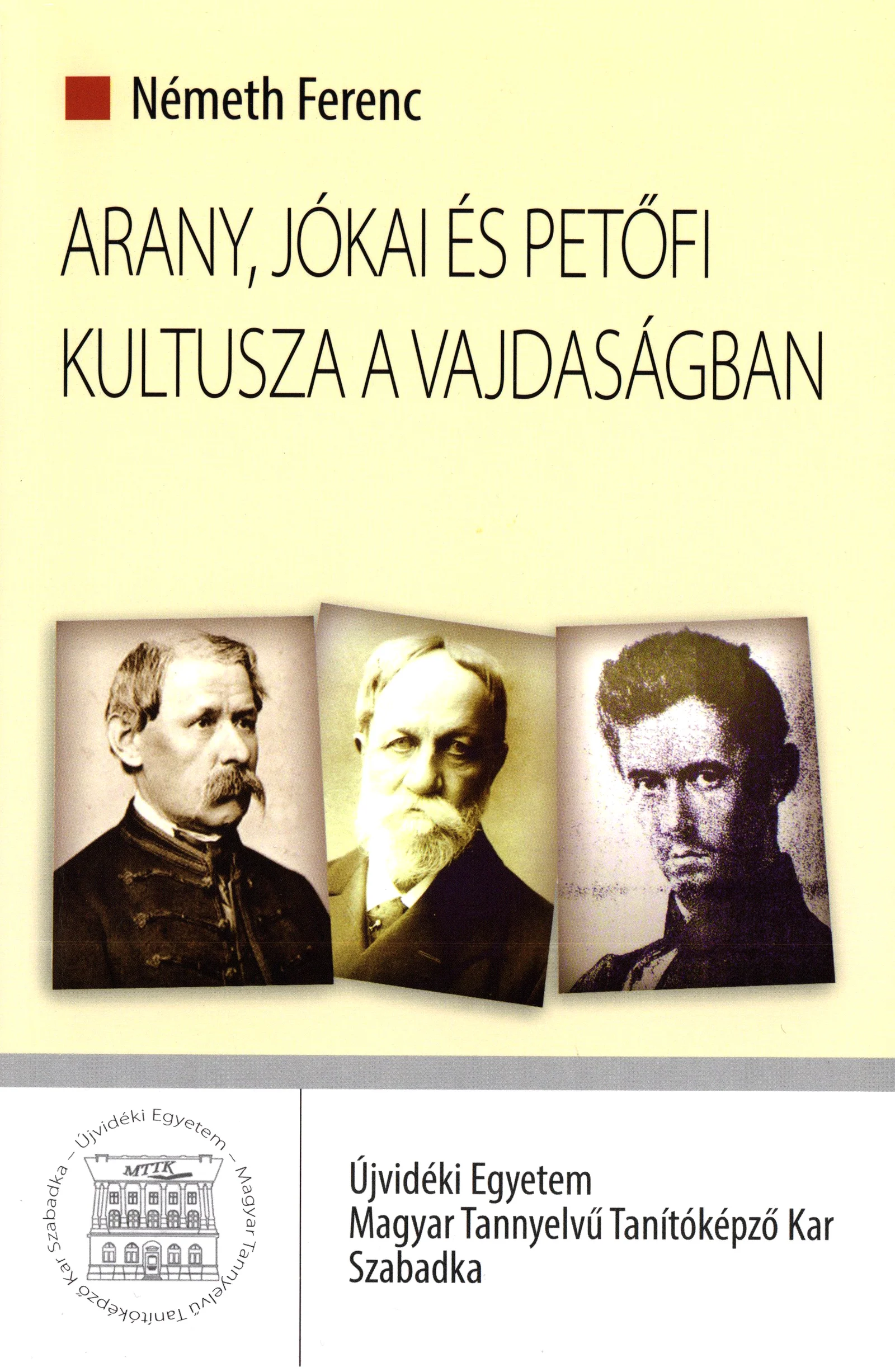
- Németh Ferenc
- Year and place of publication:
- 2014,Subotica
- Publisher:
- Újvidéki Egyetem, Magyar Tannyelvű Tanítóképző Kar
- ISBN:
- 978-86-87095-49-6
- Page count:
- 408 pages
- Genre:
- Study
Flap Text
Among Hungarian writers, Arany, Jókai, and Petőfi are among the most cultic figures; celebrating the round anniversaries of their births and deaths has been a duty since the 19th century. The specific traits highlighted during these celebrations reveal more about the celebrants (and their era) than about the authors themselves. The cult of these three 19th-century authors in the territory of present-day Vojvodina – this is how Ferenc Németh geographically localizes his research area – has been shaped by a whole series of social formation and imperial changes. Ferenc Németh’s choice of subject is therefore fortunate, important, and interesting all at once: under such circumstances, the determination of the cult’s developmental history by the course of history is particularly perceptible and can be made perceptible. In his research, Ferenc Németh reviewed material spanning over a century and a half. In the case of all three writers, he traces the development of their cult back to their visits to Vojvodina during their lifetimes, their connections with local writers and cultural institutions, and/or the Vojvodina-related aspects of their works. The chronological approach clarifies how the system of criteria for the cult of Arany, Jókai, and Petőfi developed before Trianon, in the interwar period, and after the Second World War. It also becomes clear that the period since the Second World War cannot be treated as a uniform era: the years following the end of the partisan war favored the cult of the militant Petőfi much more than that of Arany or Jókai. A particular merit of the study is that it also reports on the Serbian reception of the three authors.
Mihály SZAJBÉLY
Author Qualifications
Takács Márta
Editor-in-chief
Takács Márta
Responsible editor-in-chief
Bene Annamária
Editorial board
Francišković, Dragana
Editorial board
Czékus Géza
Editorial board
Hózsa Éva
Editorial board
Hugyik Eleonóra
Editorial board
Huszka Márta
Editorial board
Németh Ferenc
Editorial board
Takács Márta
Editorial board
Szilágyi Márton
Reviewer
Szajbély Mihály
Reviewer
Thomka Beáta
Reviewer
Rajsli Ilona
Reviewer
Göncöl Róbert
Layout editor
Csernik Előd
Cover design
Huszka Márta
Corrector
Table of Contents
- Bevezető7
- I. Az iskola mint kultusztér:
- Arany János kultikus megközelítései a Vajdaságban11
- A kortárs kultuszteremtő: Lauka Gusztáv12
- Arany János iskolai kultuszának kialakulása27
- A patetikus fetisizáltság tanári retorikája36
- Az Arany-kultusz a két háború között40
- A multikulturális közeg: a recepciótól a kultuszig48
- Párhuzamos kultuszok: Arany és Petőfi55
- A második világháború utáni vajdasági Arany-kép61
- II. Jókai Mór „jubileumi” kultusza a Vajdaságban
- A biografikus elemek összekapcsolódása: Jókai útjai a déli végeken73
- A Jókai-kultuszt éltető kortárs: Lauka Gusztáv77
- Jókai a szerb irodalomban: a recepciótól a kultuszig82
- Jókai ötvenéves írói jubileumának vajdasági ünneplései (1893–1894)92
- A kultikus Jókai-fotók140
- Jókai halála, temetése – a nemzet részvéte (1904)144
- A Jókai-szobor (1921)162
- Jókai vajdasági kultusza a két háború között (1918–1941)116
- A Jókai-kultusz a Vajdaságban 1945 után: újraolvasások és (át)értelmezések183
- III. A „harcos” Petőfi-kultusz Vajdaságban
- Petőfi Sándor vajdasági kultuszának kezdetei192
- A vajdasági Petőfi-kultusz megalapozói: Jámbor Pál és Lauka Gusztáv195
- Petőfi kultuszának alakulása Bácskában és Bánátban 1918-ig207
- Petőfi a szerb irodalomban223
- Kultikus szövegek és kultuszversek Petőfiről a Vajdaságban (1918-ig)232
- A Petőfi-kultusz beolvadása március 15-e kultuszába259
- A Petőfi-kultusz kisebbségi létben (1918–1941) (A legendák Petőfije) 281
- A Petőfi-kultusz 1945 után: a „harcos” és „jelszó” Petőfitől a „lírikus” Petőfiig301
- REZÜMÉ331
- SUMMARY337
- Irodalom342
- Melléklet357