


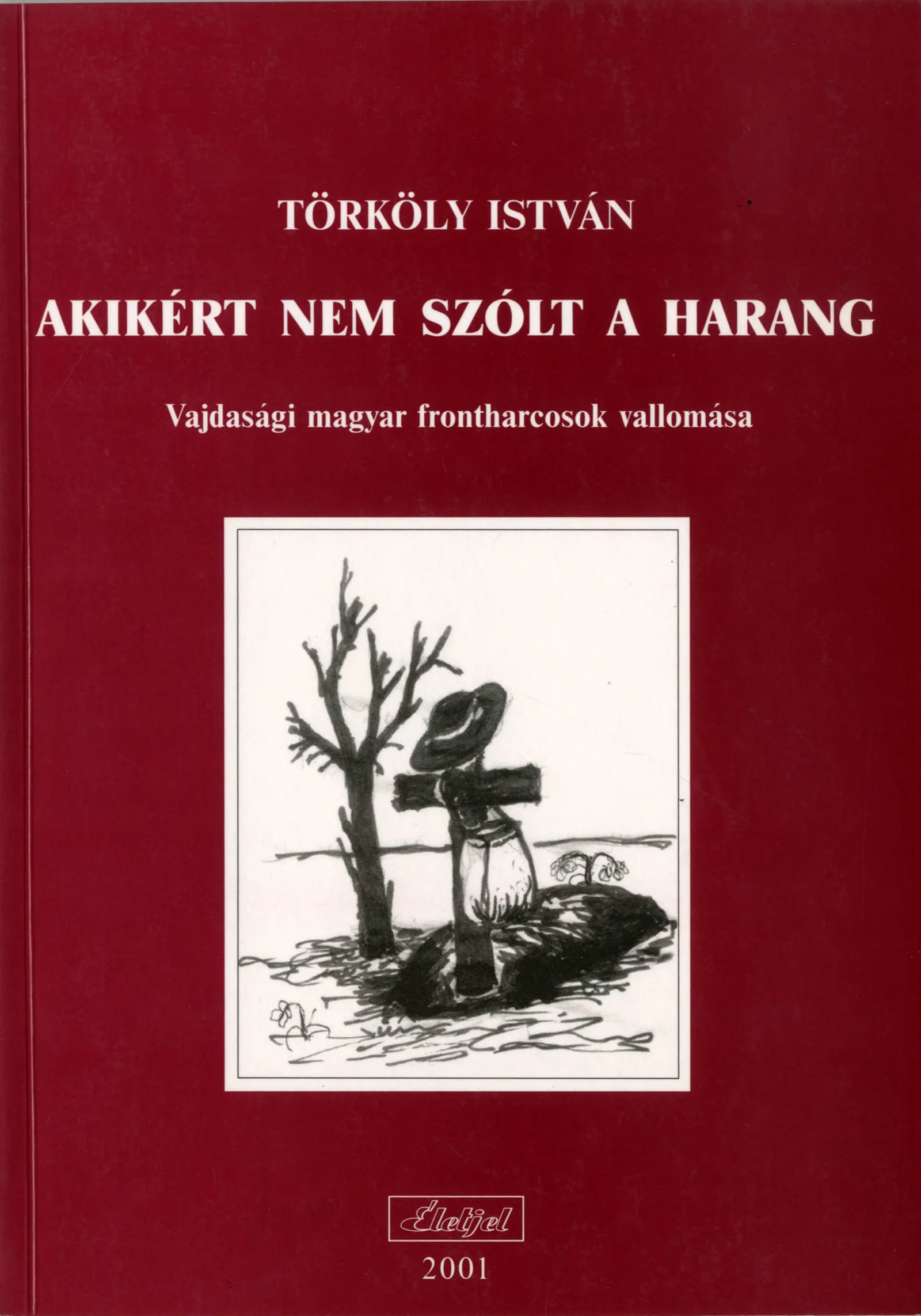
- Author:
- Törköly István
- Year and place of publication:
- 2001,Subotica
- Publisher:
- Szabadkai Szabadegyetem
- Responsible publisher:
- Perović, Blažo
- Series title:
- Életjel Könyvek
- ISBN:
- 86-82147-41-6
- Page count:
- 155 pages
- Genre:
- Monograph
- Content owner:
- Vajdasági Magyar Művelődési Intézet
- Inventory number:
- 5115
- Subject terms:
- Petőfi Brigadehistory
Flap Text
In his book Akikért nem szólt a harang (For Whom the Bell Did Not Toll), István Törköly attempts to reconstruct the authentic history of the former Petőfi Brigade based on the testimonies of witnesses, more than half a century after the events. Why did the journalist feel the need to do this now? Among other reasons, probably because “back then” there was no opportunity to paint an accurate picture. Although a book was published at the time about the formation and military activities of the brigade, it omitted details that could not, or “should not,” have been written about then. Yet, from the very beginning, the participants knew how the brigade was formed and why it was brought into existence. On the one hand, it was necessary to mobilize the Hungarians of Vojvodina (too) for armed struggle against fascism; on the other hand – and this was particularly emphasized! – by “voluntarily” joining the brigade, they would wash away the “disgrace” that centuries had placed upon their nation, especially their role in the Second World War, which soon after the war’s end was given a name: the last satellite of fascist Germany, the guilty nation, and so on. Thus, the appropriate pathos was created for the formation of the brigade, but the “volunteers” were sent to the front line, in other words, to the slaughterhouse, without proper equipment and training: “Get yourself a weapon at the front, snatch it from the enemy, just as our heroic partisans did at the beginning and after the uprising.” As we know, already during recruitment, such “mistakes” were made that the recruiters stayed home because “they were needed in the rear,” but this only came to light after the “events” had unfolded, although it had not been openly discussed or written about until now. So, already during recruitment, the “lads” were deceived and tricked, many of whom “volunteered” because they were told: if you don’t join the brigade voluntarily, we will conscript you into the army! What happened to them is recounted to István Törköly by the witnesses still alive today. This collection of testimonies is important because it attempts to dispel a legend and false pathos that lived on for many decades. The testimonies were not collected by a historian, but by a journalist, one might say a late chronicler, who, guided by the witnesses, traversed the bloody calvary of the brigade. If someone ever wishes to write the true history of the Petőfi Brigade, István Törköly’s book can serve as a guide.
István NÉMETH
Table of Contents
- Bevezetés5
- I. RONGYOSAN BÁTORSÁGGAL
- Még egyszer a Petőfi brigádról9
- Egy legenda árnyfoltja12
- Bánsági magyarok is a harctereken16
- Két mozgósítás Szajánban20
- A kiskőszegi (batinai) csata24
- Miért éppen Kiskőszeg?25
- Tordaiak, magyarcsernyeiek, tóbaiak a Petőfi brigádban31
- Tizenegy magyarcsernyei közül hat elesett33
- Tóba: Szántó András három fia34
- Magyar önkéntes vörös Petőfi brigád36
- Egyszerre több ezer önkéntes?38
- Ki is volt Börszt Henrik?42
- A Petőfi brigád megalakulásáról44
- Magyarország területén a petőfisták47
- Bátor helytállás – nagy veszteségek51
- A levél55
- A bolmáni csata57
- A Pedőfi brigád parancsnokának halála64
- A Petőfi brigád föloszlatása69
- A brigád orvosának visszaemlékezése72
- Zentai magyarok a Jugoszláv Népfelszabadító Hadsereg alakulataiban75
- II. ÉLŐK HOLTAKRÓL ÉS CSATÁKRÓL
- Klarinét és géppuska (Ősz Szabó Mihály)83
- Műtét után daloltam (Molnár László)87
- Agyonlőtték a sebesülteket is (Bicskei István)92
- Szivart kaptam Titótól (Kincses Imre)97
- Eltemettem néhány bajtársat (Polyák László)101
- Sírkereszten kalap és tarisznya (Döme Jenő)104
- Nem jutottunk a Petőfi brigádba (Kajári Ferenc)109
- Puskalövés nélkül Ausztriáig (Dr. Domány László)112
- Jaj, Karcsikám! (Nyiki István)115
- Másfél napig a gyárkéményen (Nemes Miklós)118
- Aranyrojtos magyar lobogóval (Buza Sándor)122
- A Don-kanyart is megjárta (Pap István)129
- Amikor igazán ember az ember (Tóth Bojnik Imre)134
- Befejezés139
- III. MELLÉKLETEK
- Kivonat az 1945-ben elesett zentaiak névsorát tartalmazó füzetből141
- A Petőfi brigád önkénteseinek topolyai névsora144
- A Petőfi brigád vajdasági harcosai Topolyáról145
- Csantavérről 148
- Bajsáról149
- Bácsföldvárról150
- Kishegyesről150
- Feketicsről150
- Moravicáról151
- Bajmokról153
- Adáról153
- Debellácsról153
- Zentáról153
- Törzsudvarnokról153
- Horvátországban csatlakoztak a brigádhoz154
- Budapesti harcosok a Petőfi-zászlóaljban154
- Magyarország más városaiból és falvaiból154
- Magyarország egyéb vidékeiről154
- FORRÁSMUNKÁK