



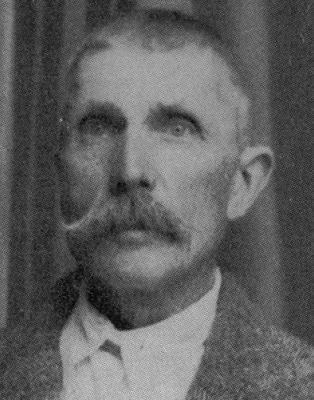
Borbély Mihály
Biography

Source of the photo: Scientific Publications of the Institute of Hungarology. 1971/7.
He grew up in Kisbicske and Nagybicske, herding pigs as a young swineherd, driving them out to the meadow and back home. He worked in Aladár, and as a shepherd in Akacs. He married very early, bringing his chosen one home from Somogy. His life was tumultuous, his labor hard, but he could not venture into the wide world. He settled in Egyházaskér, where he struggled for a long time as a smallholder: he rented land, farming one or two acres. He did not live in a grand palace, but out in the fields, in a modest, self-built farmstead, though he moved into the village not long before his death.
He sweated, rushed, haggled, he too wanted to climb up, to make something of himself, but he remained a poor man until the end of his life. “He did every kind of work there was in the world,” said his sister, Róza Borbély. He started many things, tried many things: he exchanged flour, dug earth, transported goods, sold bread to customs officers, traded at markets, traveled from village to village with pottery, dealt in horses and pigs, collected chamomile, kept a pálinka still, traded tobacco, and even engaged in usury with borrowed money, but this business almost broke him. Poverty was not to his liking, but he was not born under a lucky star.
His life changed somewhat when fate unexpectedly brought him together with Lajos Kálmány, to whom he told stories for daily wages. The meeting with the great collector resulted in a book published in 1914 (Traditions, I–II., the first volume was published in Vác, the second in Szeged). Over the years, we also learned that Mihály Borbély is the first storyteller in the history of Hungarian ethnography whose 51 tales (mediated by Lajos Kálmány) were published in a separate volume.
Source of the biography: https://hetnap.rs/cikk/Borbely-Mihaly-6580.html