



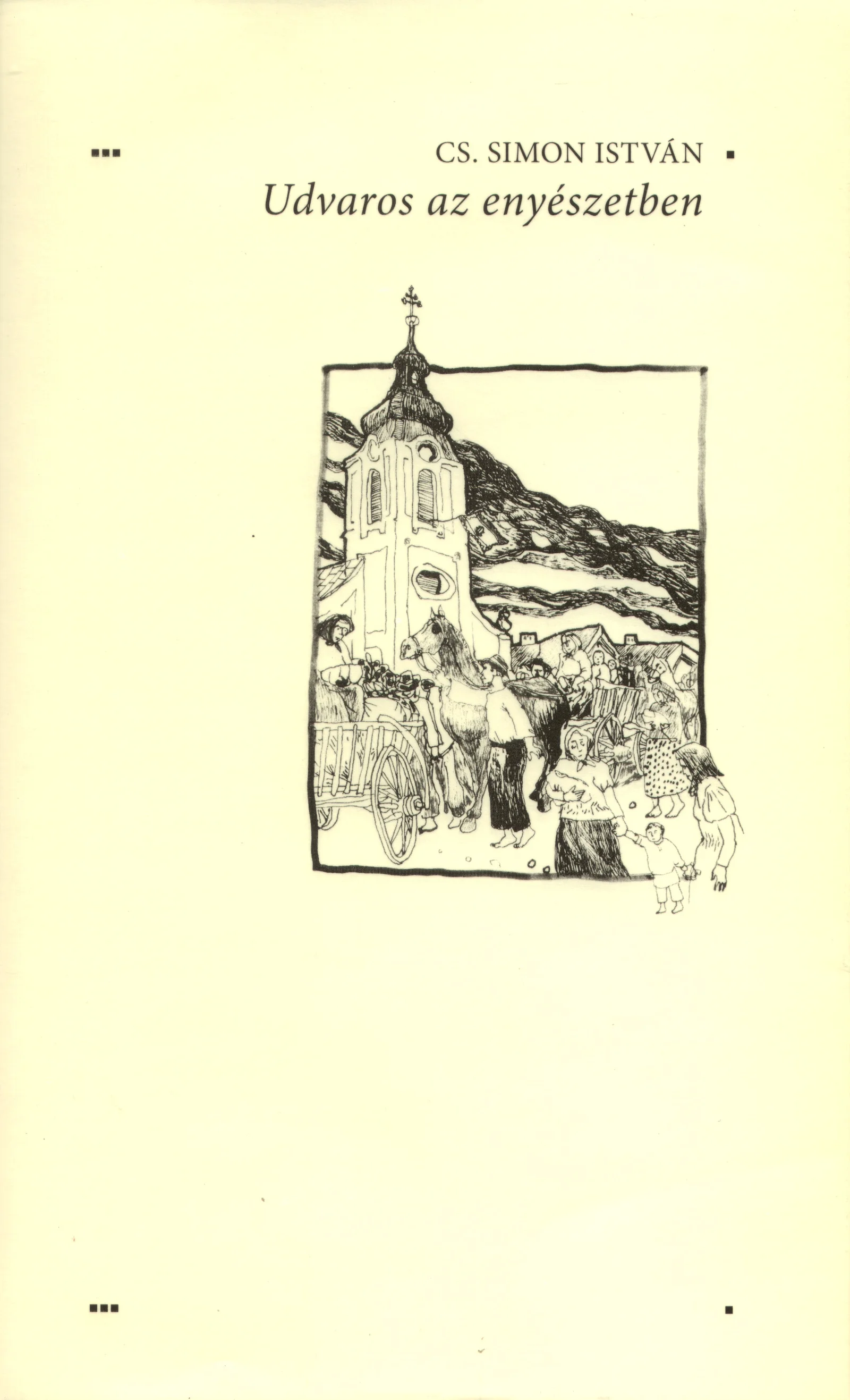
- Author:
- Cs. Simon István
- Year and place of publication:
- 2007,Senta
- Publisher:
- Vajdasági Magyar Művelődési Intézet
- Responsible publisher:
- Hajnal Jenő
- ISBN:
- 978-86-86469-04-5
- Page count:
- 128 pages
- Art form:
- epic poetry
- Genre:
- narrative
Preface/Afterword
FOREWORD
I never fail to read the writings of Cs. Simon István published in Magyar Szó or other Hungarian newspapers and journals in Vojvodina. Yet, I cannot say that they lighten my heart. But perhaps I am like the great Hungarian poet, János Arany, who, a year after the suppression of the War of Independence, sang in his poem Ősszel (In Autumn): Your clouds and roaring wind, / The rustling bracken, moss, / A lonely oak on the hill, / Wandering fire, murmur of waves – / This is what my soul desires now! / A fading people, who with melancholic mood / Broods over its past… Come, Ossian, / With your misty, obscure song.
This Ossianic melancholy is also palpable in Cs. Simon István's writings, just as the parallel between the situation of Hungarians in the mid-19th century and now, on the threshold of the 21st century, is undeniable.
From the writings in this volume, the age and pathology of the current demographic change in the Délvidék/Vojvodina can be established with almost scientific precision. The depopulation of the Vojvodina part of Banat is particularly disheartening, as the destruction there is demonstrated not only by the increasingly rapid emigration of the indigenous population but also by the decay and subsequent disappearance of settlements – villages, farmsteads, and individual buildings – with drastic speed. It is evident that even others currently lack sufficient strength and vitality to fill the living space of the defensive, constantly retreating Hungarian population of Banat.
In Cs. Simon István's writings, this decline and destruction are reflected on multiple levels: in the rewilding and desolation of the landscape itself, including the disheartening sight of human dwellings, public buildings, economic facilities, and infrastructure (farmsteads, village houses, schools, former inns, estate enterprises, railways, bell wells, etc.) turning into ruins; and secondly, in the portrayal of human lives and destinies becoming devoid of prospects and impoverished. If we read this volume as a chronicle of the erosion of the Hungarian Délvidék and the Hungarians of Délvidék, then its characters, its “heroes,” are mostly elderly people who have already passed away or are on their way out. And how much poetry the publicist, blessed with a poetic vein, can infuse into this bleak picture, let me illustrate with just a single sentence from the writing Félredobva (Cast Aside): “The chairs regularly surround the table covered with a patterned tablecloth, where, however, only loneliness sits for months.” Is Gyula Illyés not right when he writes in his poem Bartók: “He who beautifully expresses / the horror, also resolves it. / Behold, the great soul's answer to action / and the artist's, that he was worth / suffering hell.” Only a few middle-aged or young people, perhaps still trying something, appear in these writings, but even they cast their gaze towards distant lands, and only the fear of the pangs of homesickness hinders their “nest-breaking desires.”
Of course, the dark portrayal is not the writer's “one-sided pessimism,” but rather a situation assessment reflecting reality. However, that this was not always the case is also indicated by some writings depicting the distant past, which revive the “economic miracle” of some once flourishing settlements centered around Csóka in the northwestern corner of Banat. And it draws authentic portraits of some former “landlords” or “capitalist entrepreneurs,” who were later referred to as “cruel exploiters” for about half a century, although compared to the current hopeless situation, they, if not the Canaan of abundance, at least created the possibility of a secure livelihood even for the lowliest farmhand. The last writing in the volume also has a more cheerful tone, which – as an outlook – takes the reader to more distant lands, namely Székelyföld, while also showing that the agony in Bačka-Banat still has other alternatives, even for a minority. The writer's message is therefore clear: there is still hope, there is still opportunity. Even from this general collapse, there can still be a way out, a saving development can sprout.
Until then, however, we must persevere, even if through gritted teeth! And in this, this book by Cs. Simon István can help us, which is by no means a collection of bitter jeremiads, but precisely the final gritting of teeth that increases the necessary concentration of strength and determination, which may help to break the centuries-old shackles that paralyze and bind the living body of the nation.
János Szloboda
Table of Contents
- Előszó5
- Múltba süppedten
- Őszbekomorodottan 9
- Ázott szőlőpászták9
- A pitvar előtt 11
- Vízkeresztkor12
- Jég és porhó a Széki majornál 15
- Tájkép kivert kutyával16
- A fekete víz partján19
- Zölddel satírozva20
- Az Árenda majornál21
- Barangolás az Arankánál22
- Körbefonódottan25
- A Tisza és a Csikér között26
- Utazás közben 28
- Ragaszkodás a visszahozhatatlanhoz29
- Bárány és farkas 30
- Virágok a Tiszán31
- Amikor „a kocsik az utcák végén egymásba akadtak” 32
- Hangtalan hangszerek 33
- Emlékezés egy Haranga sori házra 34
- Elhagyatottan 35
- Milyen volt a hodicsi iskola? 37
- Tiszaszentmiklóson élnek még lengyelek 38
- Gyorskomp a Tiszán41
- Feketetónál 43
- Hová lett a csöngettyűs kút? 45
- Hódfarkú cserepek a járda mellett46
- Sorsörvényben
- Nagy Péter nem költözködik már 51
- Szállnak a darvak 52
- Jeges lélek 55
- Mihály bá’ útja56
- Egy elhagyott kispad 57
- Kínosan elnyújtva58
- Magába komorodottan59
- Csak azt látta, amit már elhagyott 60
- Ez a ház eladó!61
- Átgyalogolt a huszadik századon62
- Daltalanul 64
- Kormosodó fűszálak 65
- Hónaljnyi lapított kartondoboz 66
- Félredobva69
- A kanapén vesztegelve70
- Nem látszik a vége 71
- Az óvatos kontrás 72
- Pályaképek
- Udvaros az enyészetben 77
- Az ember igyekszik átlépni az árnyékát 78
- A sámán fogsora 82
- Száraz szelek 84
- A fölfelé buktatott 86
- Albániában vállalt munkát 88
- Kátyús úton89
- Legyintgetve90
- A piacnál 94
- Vihar után kell a diót szedni 95
- A Taglós 96
- A sarki ház lakója98
- A csörgőóra nélkül ébredő 99
- Visszapillantás egy tanári pályára 100
- „Elcsapott” termőföld 102
- Ritkán látogatnak haza 103
- Fönt a Hargitán
- Bolyongás a Kremenyák körül 107
- Húsvét a kastélyban108
- Nyesedékből karácsonyfa111
- Hová lett Szent Flórián csókai szobra? 113
- Erős mérget használtak 114
- Fölszedett és elhagyott rozsdás sínek116
- Talliánok Törökkanizsán 117
- Feleségül vette fia jegyesét 119
- „Negyvennyolcnak nagy idején”120
- Most jöttem Erdélyből122